









A vehicle with an automatic start-stop function relies on more than software and a durable starter motor. It also requires a battery that can support frequent engine restarts, repeated charge and discharge cycles, and electrical loads while the engine remains off.
This is where the start-stop battery comes in. In this article, we will explain how a start-stop battery works, which battery technologies are available, and what automotive manufacturers should evaluate when they select a supplier.
What Is a Start-Stop Battery?
A start-stop battery is an automotive battery designed to support frequent engine restarts and repeated charge-discharge cycles. It supplies the high current required by the starter motor. It also temporarily powers lights, climate controls, infotainment equipment, safety systems, and other electrical loads when the engine is off.
During a trip, the start-stop system may shut down and restart the engine many times. As a result, the battery operates at a partial state of charge more often and must accept charge quickly between stops.
Requirements of a Start-Stop Battery
A conventional starter battery is designed primarily for a short burst of high current. It performs this task well when engine starts occur at normal intervals, but frequent stop-start cycles can cause rapid capacity loss and plate deterioration.
Therefore, a start-stop battery must meet several additional demands:
l High cycle durability for repeated discharge and recharge events
l Strong cold-crank performance for reliable engine restarts
l Good charge acceptance during short periods of alternator output
l Stable power for vehicle electronics while the engine remains off
l Reliable operation at a partial state of charge
l Compatibility with the vehicle’s battery management and energy recovery strategy
Types of Start-Stop Batteries
Automotive manufacturers can choose from a range of technologies. The correct option depends on the vehicle platform, electrical demand, climate, cost target, weight allowance, and battery management strategy.
Battery Type | Core Technology | Main Characteristics | Typical Application |
AGM | Valve-regulated lead-acid with electrolyte absorbed in glass mat | High cycle durability, strong charge acceptance, low internal resistance, no free liquid acid | Common in advanced start-stop systems, regenerative-braking vehicles, and models with high electrical demand |
EFB | Enhanced flooded lead-acid with liquid electrolyte and reinforced positive plates | Better cycle performance and charge acceptance than a conventional flooded battery | Common in basic or moderate start-stop applications |
LFP | Lithium iron phosphate | Low weight, high cycle potential, and strong power capability when correctly engineered | Requires a compatible battery-management design, charge profile, cold-temperature strategy, and vehicle validation |
NFPP | Sodium-ion chemistry with a sodium iron phosphate pyrophosphate cathode | High-rate discharge potential, rapid charge acceptance, and broad-temperature operation | Emerging technology that requires model-specific electrical, mechanical, safety, and vehicle compatibility checks |
AGM Batteries
AGM stands for Absorbent Glass Mat. Glass-fiber separators hold the electrolyte between the battery plates, so the acid does not move freely inside the case. This structure supports high current output, good charge acceptance, and greater cycle resistance than a standard flooded starter battery. AGM batteries suit advanced start-stop systems, vehicles with regenerative energy recovery, and models with many electrical accessories.
EFB Batteries
EFB stands for Enhanced Flooded Battery. It uses liquid electrolyte like a conventional lead-acid battery, but its plate structure, active material, and internal design provide better cycle durability. EFB batteries often serve vehicles with basic start-stop functions and moderate electrical loads. They offer a balance between performance and cost.
LFP Batteries
LFP, or lithium iron phosphate, offers high cycle life and strong discharge capability in a relatively light package. Its low internal resistance can support high starter currents, but the battery requires control electronics that protect cells from excess charge, excess discharge, and unsuitable temperatures.
NFPP Batteries
NFPP refers to sodium iron phosphate-pyrophosphate, a polyanionic cathode material for sodium-ion batteries. This chemistry uses sodium ions instead of lithium ions to store and release energy. NFPP technology can provide high power output, rapid charge acceptance, and broad temperature performance for automotive applications. Its raw materials also avoid lead and lithium active materials.
What Manufacturers Should Consider When Sourcing Start-Stop Batteries
Automotive manufacturers should assess the following factors before selecting a start-stop battery supplier.
1. Production Capabilities
A supplier should have enough production capacity for forecast demand, model launches, seasonal changes, and replacement-market needs. Manufacturers should assess factory locations, production-line flexibility, automation, traceability, technical staff, tooling support, and capacity expansion plans.
2. Battery Specification Alignment
The battery must match the vehicle’s electrical and mechanical requirements. Key factors include cold-crank current, capacity, reserve power, cycle life, voltage window, charge acceptance, dimensions, weight, terminal design, and environmental limits.
For ion-based batteries, the review should also cover cell balance, protection controls, communication requirements, and compatibility with the alternator and battery management system.
3. Supply Chain Reliability
Stable access to cells, lead, sodium or lithium materials, separators, cases, electronic components, and other essential parts can reduce delivery risk. Buyers should examine supplier diversity, inventory policies, logistics routes, regional support, and contingency plans.
4. Certification Standards
Required certifications differ by chemistry, vehicle class, destination market, and transport method. Suppliers should provide current test reports and documents relevant to product safety, performance, quality management, electromagnetic compatibility, and shipment.
Automotive customers should verify the scope and issuing body of each certificate. A general company certificate does not automatically cover every factory, battery model, or application.
5. Quality Control System
A suitable quality system should cover incoming materials, production processes, electrical tests, end-of-line inspection, lot traceability, failure analysis, and corrective action. Automotive manufacturers should also review sample approval procedures, change controls, warranty data, and audit access.
Aeson Power Start-Stop Battery Solutions
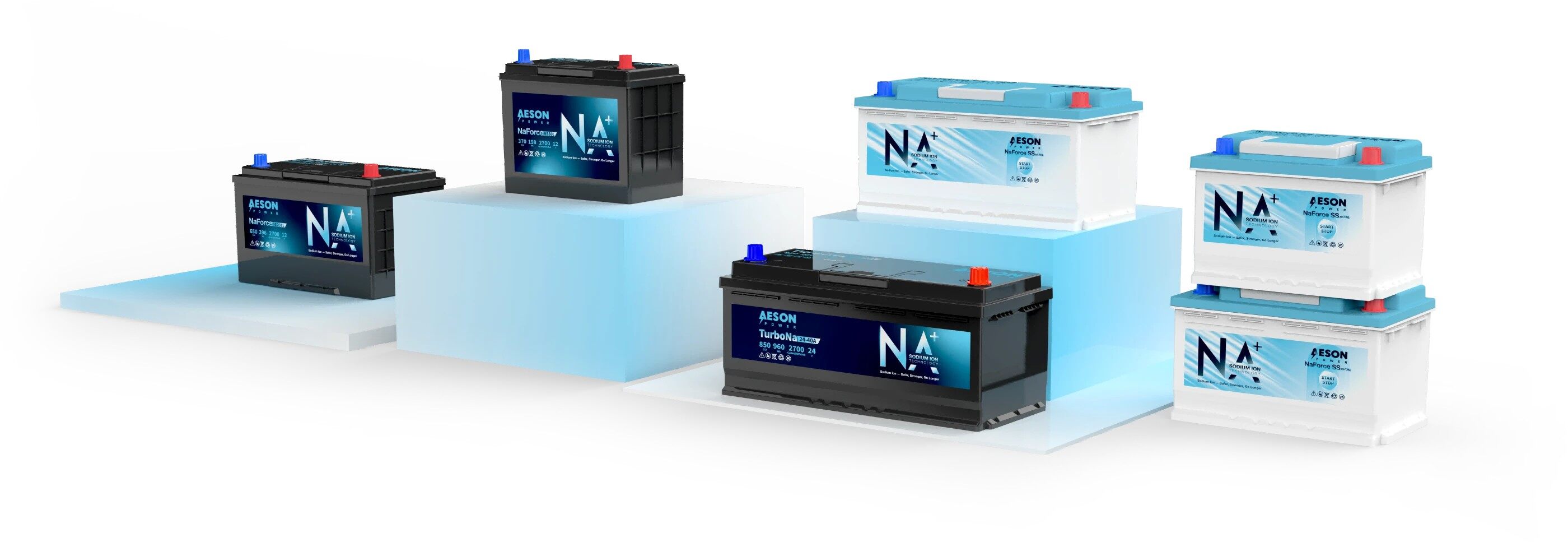
At Aeson Power, we provide advanced 12V sodium-ion start-stop batteries based on NFPP chemistry. Our NaForce SS range covers common automotive case sizes, including D23, D26, NS40, and European L2 through L6 formats.
Our product portfolio supports frequent engine restarts, rapid charge acceptance, and high-current output. We also provide product-matching assistance, technical documentation, volume-order support, and customized solutions for automotive manufacturers, distributors, and other B2B customers.
We work closely with customers to evaluate key compatibility factors, including voltage, dimensions, terminal layout, cold-cranking performance, charge profile, temperature limits, and vehicle energy-management requirements, so our customers can have a suitable start-stop battery for each target vehicle platform.
Conclusion
Start-stop vehicles require batteries that can withstand frequent restarts, repeated charge-discharge cycles, partial-state-of-charge operation, and continuous electrical loads while the engine is off. Whether manufacturers select AGM, EFB, LFP, or NFPP technology, the battery must match the vehicle’s electrical architecture, operating climate, performance targets, and energy-management strategy.
Aeson Power provides 12V NFPP sodium-ion start-stop batteries in common automotive case sizes, along with compatibility assessment, customization, technical documentation, and volume-order support for automotive manufacturers and distributors. Contact us to discuss your requirements.