









Products
You can find everything you want here
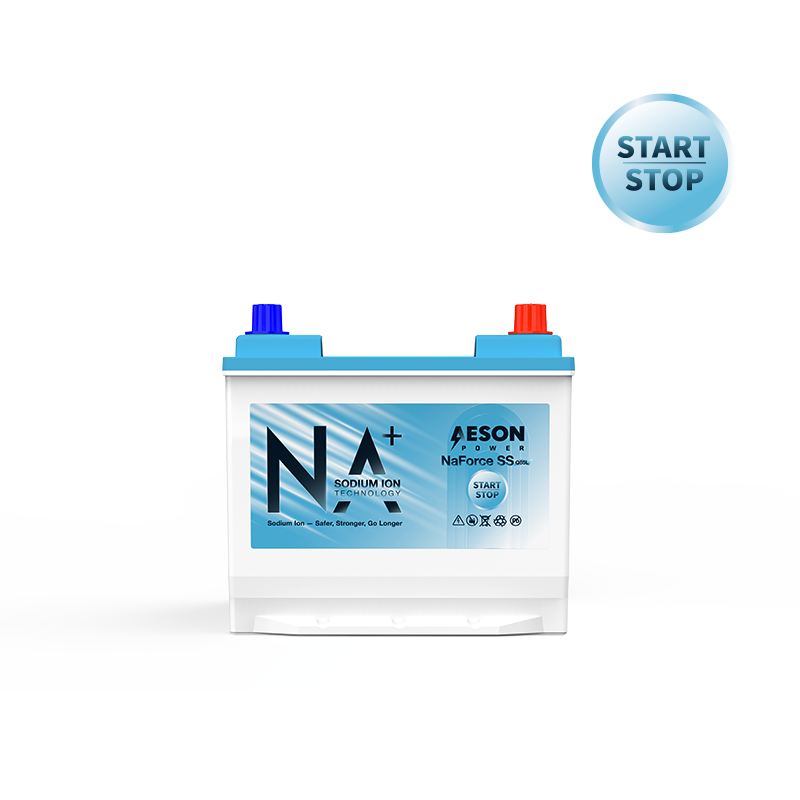
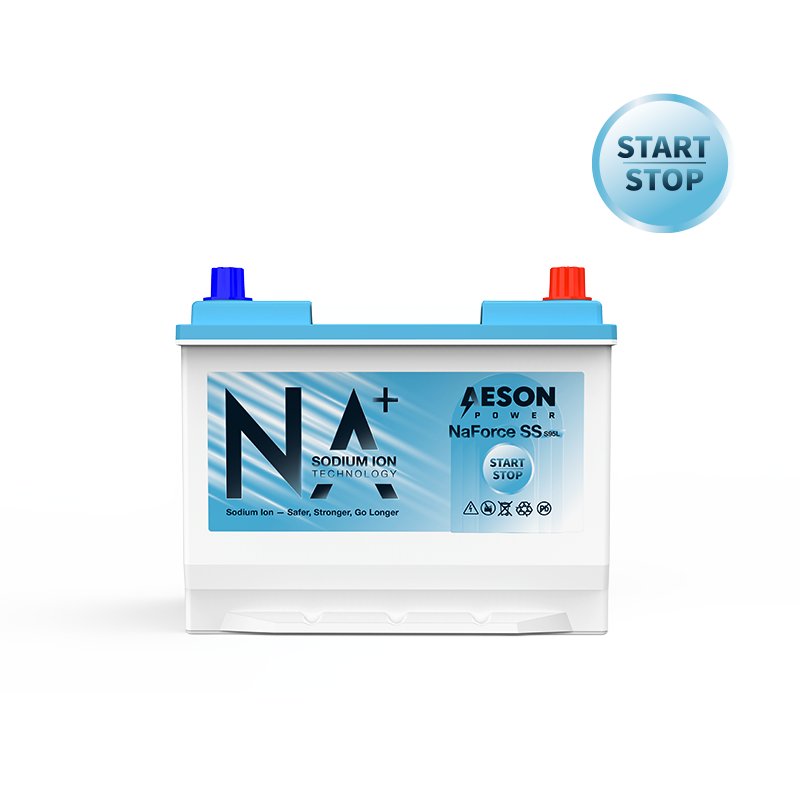
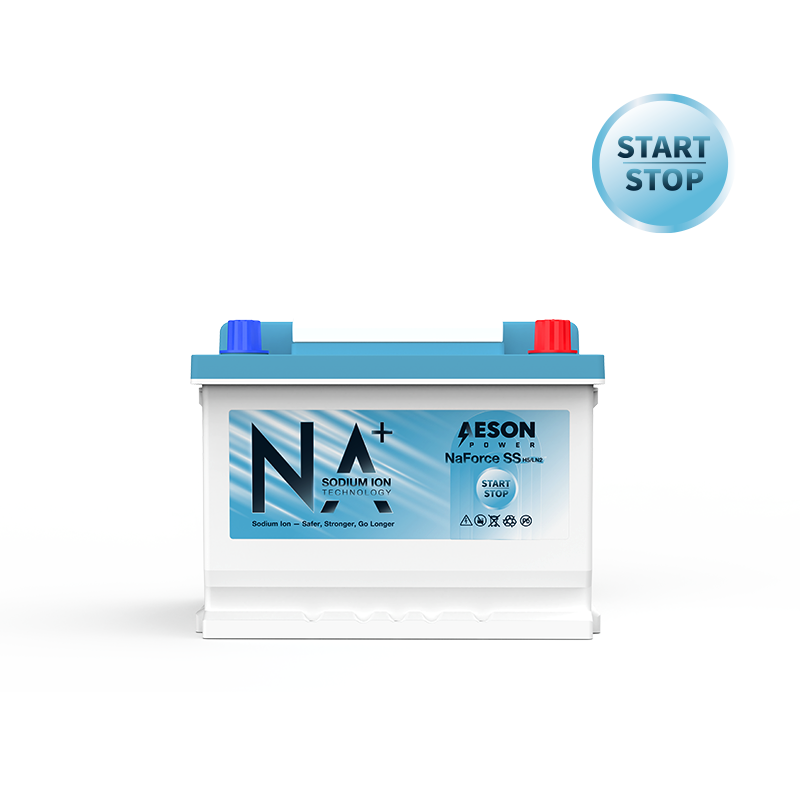
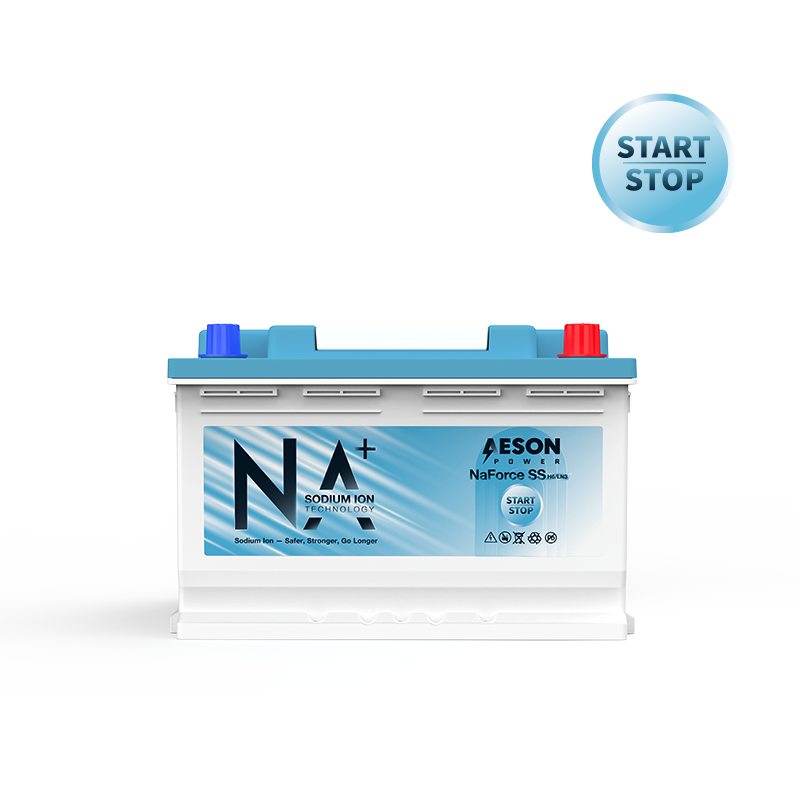
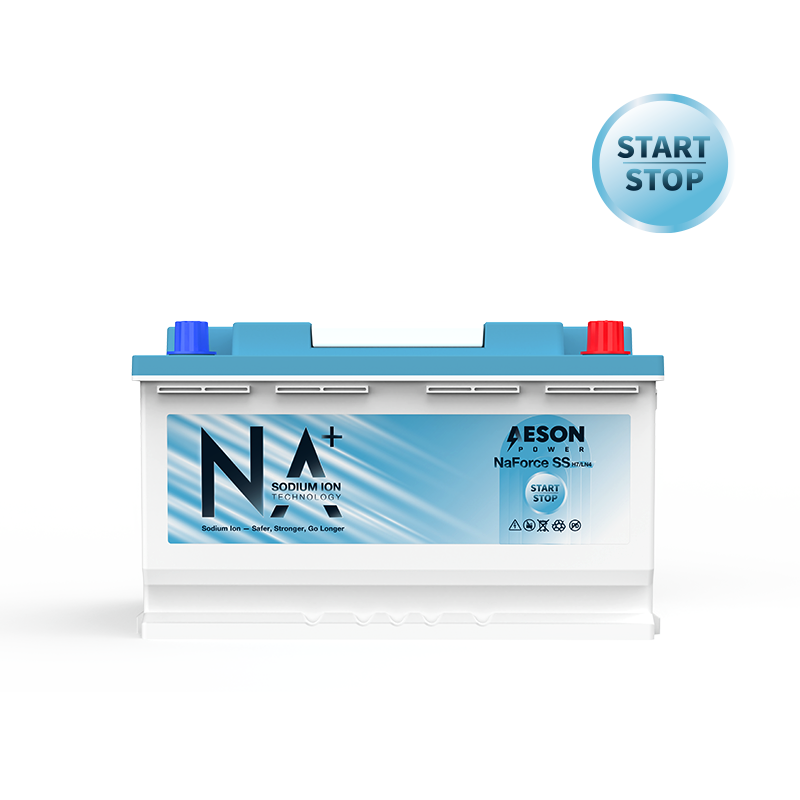
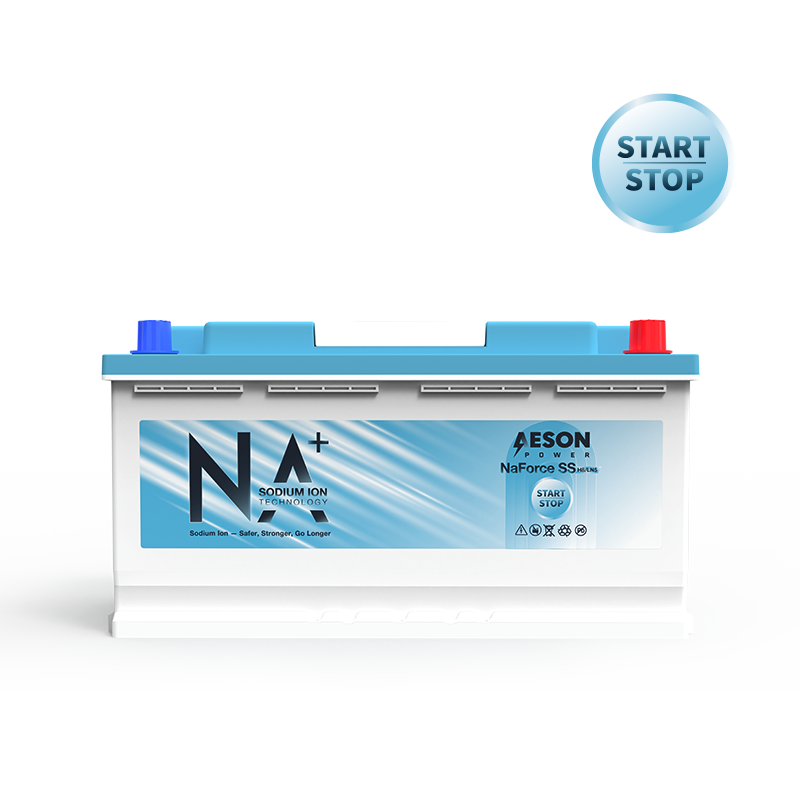
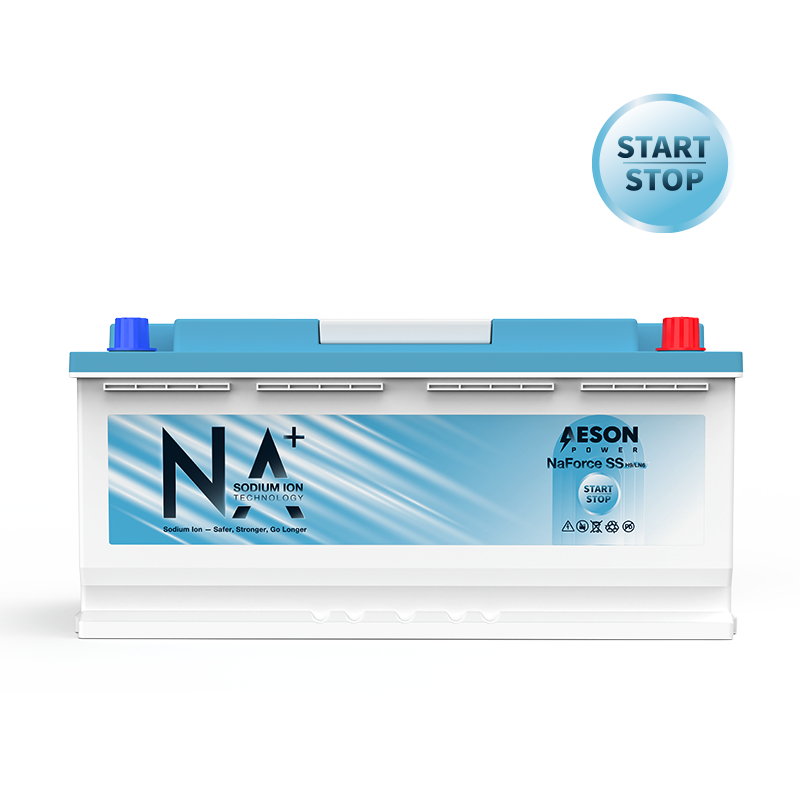
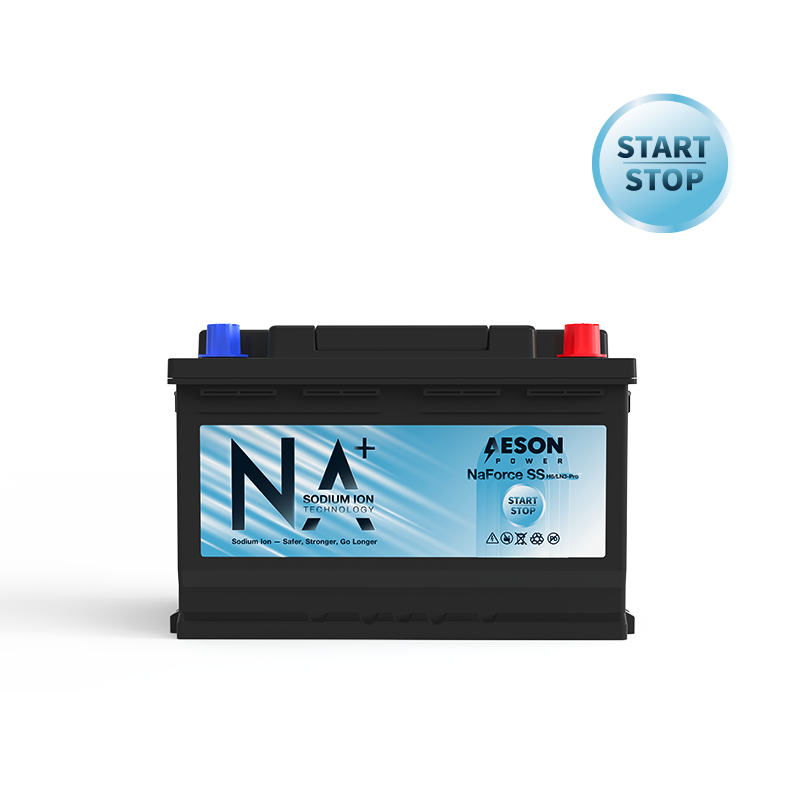
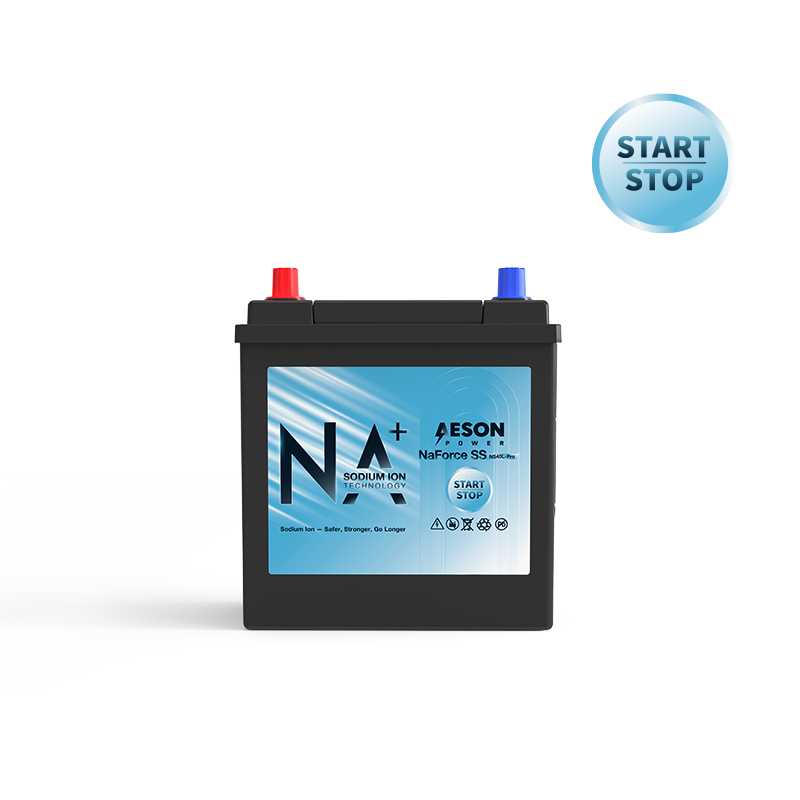
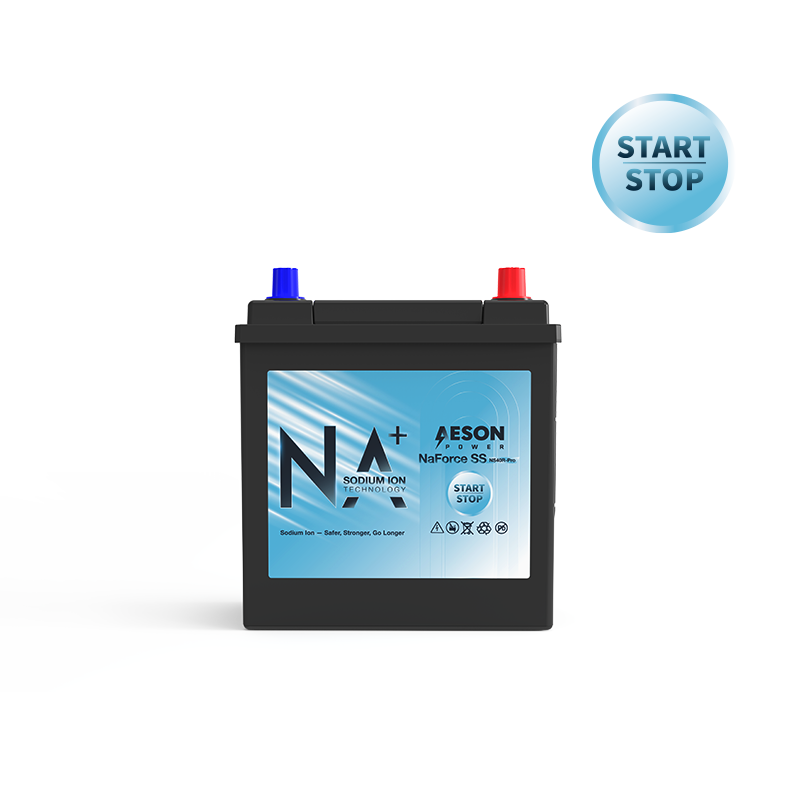
Sodium-Ion Car Batteries for Start-Stop Vehicles
Built for frequent engine restarts, Aeson Power NaForce SS Series sodium-ion car batteries deliver instant starting power, rapid charging, and strong cold-cranking performance in a lightweight design. With wide-temperature performance and a service life of up to 180,000 start-stop cycles—more than three times the cycle life of traditional lead-acid batteries in start-stop and deep-cycle applications—they are an ideal replacement for common L2–L6 AGM, D23, D26, and NS40 EFB batteries used in premium and start-stop vehicles. Reliable Power for Every Restart.
Frequently Asked Questions
-
Which high-frequency application scenarios are Aeson Power 12V sodium-ion start-stop batteries mainly suitable for?
During urban morning and evening peak hours, and on heavily congested roads with dense traffic lights, a vehicle's automatic start-stop system faces its most frequent and severe tests.
Aeson Power sodium-ion start-stop batteries are born precisely for these scenarios. Tailored for extremely harsh stop-and-go road conditions, this battery features a start-stop cycle life of up to 180,000 cycles, leaving it completely unfazed by high-frequency engine shut-offs and instantaneous high-current ignitions. -
What are the advantages of the Aeson Power 12V sodium-ion battery compared to traditional lead-acid or AGM batteries?
The Aeson Power 12V sodium-ion start-stop battery achieves a generational leap over traditional lead-acid batteries.
It boasts an ultra-long cycle life of over 3,000 cycles, essentially eliminating the need for replacement throughout the vehicle's lifespan. With its extremely low internal resistance, it can deliver an ultra-high cold cranking amps (CCA), resulting in crisper ignition during extreme cold or frequent start-stop conditions. It reduces weight by 60% compared to traditional batteries of the same capacity, significantly helping to lower overall vehicle energy consumption. At the same time, it possesses a powerful 0V-level deep discharge recovery capability, allowing it to "revive to full capacity" via jump-starting even if completely drained. It is also a green, non-toxic lead-acid battery alternative, free from thermal runaway risks, making it a more efficient, economical, and absolutely safe epoch-making choice. -
What is the charging voltage? What is the full charging voltage?
Charging voltage range: 14.4~14.8 V. Recommended maximum charging voltage is 14.6V (12V).
Usually the open circuit voltage is between 13~14.5V after fully charged and rest for about 30min.
-
What is a start-stop battery?
A start-stop battery is designed for vehicles that automatically switch off the engine while idling and restart it when the driver releases the brake or engages the clutch. It must support frequent engine restarts, repeated charge-and-discharge cycles, and onboard electrical loads while the engine is off.
Aeson Power sodium-ion start-stop batteries combine high-rate discharge, rapid charge acceptance, and long cycle life to provide reliable power in frequent stop-and-go driving conditions.
-
What Are the Advantages of Sodium-Ion Batteries Over Lead-Acid Batteries for Automotive Start-Stop Applications?
Sodium-ion car batteries offer significant performance and durability upgrades over traditional lead-acid batteries in automotive start-stop systems:
60% Lighter Weight: At 60% lighter than lead-acid batteries, they significantly reduce vehicle weight, helping improve fuel efficiency and handling.
Extended Service Life: Delivering 3,000 cycles at 50% DoD, they offer more than three times the deep-cycle life of conventional batteries.
5C Fast Recharging: Supporting a fast charge rate of up to 5C, they recharge rapidly between frequent engine stops in heavy city traffic.
Wide Operating Temperature Range (-40°C to 80°C): Capable of operating reliably at temperatures ranging from -40°C to 80°C, they help prevent cold-weather starting failures and withstand high engine-bay temperatures.
0V Dead-Flat Recovery: Unlike lead-acid batteries, which may suffer permanent damage when fully discharged, sodium-ion car batteries can recover from zero volts after a deep discharge.
Improved Vibration Resistance: Built with enhanced structural integrity, they can withstand severe road vibrations and demanding driving conditions.
180K/120K Engine Starts: Rated for up to 180,000/120,000 start-stop cycles, they provide reliable power for frequent engine restarts over many years.
Sealed & Maintenance-Free: The completely sealed design eliminates the need for fluid top-ups or routine maintenance, ensuring hassle-free operation.
-
Which Start-Stop Car Batteries Are Right for My Market?
For distributors, wholesalers, fleet operators, and automotive businesses, battery selection should be based on local vehicle coverage, case size, voltage, cold-cranking amps, terminal layout, charging compatibility, and regional market demand.
Aeson Power offers 12 V sodium-ion start-stop batteries in mainstream sizes designed to replace common AGM and EFB models, including D23, D26, NS40, and L2–L6, for a wide range of passenger vehicle applications. As an automotive battery supplier, we provide product-matching support, technical documentation, support for volume orders, and customized solutions to help B2B customers build the right product portfolio for their target markets. Contact us
-
How Does a Sodium-Ion Car Battery Work?
A sodium-ion car battery stores and releases energy through the movement of sodium ions between its positive and negative electrodes. During discharge, sodium ions move through the electrolyte while electrons travel through the vehicle’s electrical circuit, supplying power to the starter motor and onboard electronics. During charging, the process is reversed.
In a start-stop vehicle, this cycle occurs frequently. The battery restarts the engine and continues powering lights, climate controls, infotainment, and other electrical equipment while the engine is temporarily switched off.
-
How Long Does an Auto Start-Stop Battery Last?
The service life of an auto start-stop battery depends on driving conditions, climate, charging-system performance, electrical demand, storage, and the selected battery model. Frequent short journeys, extreme temperatures, and charging-system problems can affect battery life.
Aeson Power NaForce SS models are rated for approximately 120,000 to 180,000 start-stop cycles, depending on the product. These cycle ratings describe tested cycling capability and should not be interpreted as a guaranteed number of calendar years. Check the specifications and warranty terms of the selected model for more detailed service-life information.
-
How Can I Identify a Faulty Car Battery?
Common signs of a faulty car battery include slow engine cranking, inconsistent start-stop operation, dashboard battery warnings, dim lights, unexpected voltage drops, or frequent jump-starts. A swollen case, damaged terminals, leakage, unusual heat, or an abnormal smell may indicate a more serious problem.
Because similar symptoms can also be caused by the alternator, charging system, wiring, or electrical connections, test both the battery and the vehicle charging system before selecting a replacement.
-
Why Should I Change My Car Battery?
A car battery should be replaced when it can no longer provide reliable cranking power, maintain the required voltage, or support the vehicle’s electrical systems. A declining battery can interfere with automatic start-stop operation and increase the risk of an unexpected failure to start.
Battery condition can be affected by repeated cycling, extreme temperatures, charging-system problems, prolonged inactivity, and improper storage. Regular testing helps determine whether replacement is necessary before the battery fails.
Upgrading to an Aeson Power sodium-ion car battery helps address these challenges. Built for frequent engine restarts, these batteries are 60% lighter than traditional lead-acid options and offer up to 180,000 start-stop cycles, 5C fast charging, and 0V dead-flat recovery. With an operating temperature range of -40°C to 80°C, they provide reliable power for every restart and serve as an ideal replacement for mainstream AGM and EFB batteries.
-
Can a Sodium-Ion Car Battery Replace an AGM or EFB Battery?
A sodium-ion car battery provides a seamless replacement when voltage, case size, dimensions, terminal layout, cold-cranking amps, and charging profiles are fully matched.
Aeson Power 12 V start-stop batteries are engineered to meet these exact specifications, covering a wide range of mainstream AGM and EFB sizes (including L2–L6, H5–H8, D23, D26, NS40, NS60, and more).
While our batteries are built to match these standards, for detailed evaluation, specific vehicle compatibility checks, or installation advice, please consult your local distributor or professional installer. You can also contact Aeson Power for technical support and dealer locator assistance.
-
How Should an Aeson Power 12 V Start-Stop Battery Be Charged?
Aeson Power sodium-ion batteries should be charged using the constant-current & constant-voltage (CC-CV) method.
For a 12 V battery:
Recommended / maximum charge voltage: 14.6 V
Maximum charge current: 2C (e.g. a 100 Ah battery → max 200 A)
Charging steps:
Disconnect the battery from the vehicle (negative terminal first).
Ensure the battery case is intact, terminals are clean and undamaged, and the charging area is well-ventilated with no open flames.
Connect the charger with the charger switched off.
Charge until the voltage reaches 14.6 V, then stop charging within 5–10 minutes.
After charging, switch off the charger first, then disconnect the battery (negative first, then positive).
Let the battery rest for 30 minutes. Open-circuit voltage should be around 13.4 V.
Do not exceed the voltage or current limits or prolong charging time, as this may damage the battery. If the vehicle alternator cannot charge it properly, remove the battery and use a dedicated charger.
-
Do Sodium-Ion Start-Stop Batteries Require Maintenance?
Aeson Power sodium-ion start-stop batteries are maintenance-free. They are sealed and do not require regular electrolyte topping-up.
However, to ensure optimal performance and service life, the following simple care is recommended:
Periodically check that terminal connections are clean, corrosion-free, and tightened to the correct torque (6–9 N·m).
Do not strike the terminals directly.
Avoid over-discharge. If the open-circuit voltage falls below 10 V (12 V battery), recharge immediately.
When the vehicle is not in use for 3 weeks or longer, fully charge the battery beforehand and disconnect power-consuming devices.
Never open or tamper with the battery cover.
Following these basic practices will help maximize efficiency and lifespan.
-
What are the main functions of the Aeson Power 12V sodium-ion automotive start-stop battery?
Start-stop batteries possess all the functions of a starting battery within the vehicle. Additionally, when the vehicle is stationary and the engine is not running, they supply energy to various electrical appliances on board; when the engine stops, they must ensure that the complete electronic system functions normally, including the power required for the next start.
-
Sodium battery charging time?
The charging time is related to the charging voltage and the charging current. For example, with 0.2C current and 14.6V voltage, the full charge time is about 5.5h; while with 1C high current, it isabout 1.1h. Normally, the charge voltage reach the limit value and last for 6-10min means it fully charged.
-
What is the discharge voltage (working voltage, i.e., closed circuit voltage in work) of sodium battery?
The discharge voltage is related to the size of the load and the SoC state of the battery. Thesmaller the load, the higher the voltage; the higher the SoC, the higher the voltage.
The closed-circuit voltage range of a new battery for start-stop use is between 9 and 12V, and thevoltage will gradually drop during usage.
-
How are sodium batteries recycled?
Since sodium-ion starting batteries are a new technology and still in the stage of continuousimprovement, there is no comprehensive recycling standards and regulations yet, the relevantrecycling specifications are basically still referred to lithium-ion batteries, and it is recommended to consult the local professional organizations at present.
-
Are sodium batteries considered dangerous goods in transportation?
Yes, now basically refer to lithium-ion products regulation.
-
How to operate the sodium battery after over-discharged?
It is recommended to place it in 5~35℃ environment, and then recharge it according to therecommended method. In order to better protect the battery and avoid the damage caused byover-discharge, please recharge it if the battery voltage is less than 1ov.
-
How do I maintenance a sodium-ion battery during long time storage?
Short-term storage (1-3 months): generally no special maintenance is needed. Regularvoltage checks are recommended in higher temperatures (>35°C) to prevent excessiveself-discharge.
Medium-term storage (3-6 months): Possible 5%~20% capacity loss; check voltage every 3months. Recharge if the voltage drops to 10V per 12V.
Long-term storage (6 months or more): Possible 20%~40% capacity loss; recommendingCharge to 40%~60%soC to prevent irreversible damage for long time storage management..