










Modern passenger vehicles are becoming more efficient as manufacturers continue adopting start-stop systems to reduce fuel consumption and emissions. However, frequent engine restarting places greater demands on automotive batteries. Unlike traditional driving conditions, start-stop vehicles require batteries to provide repeated bursts of power while handling continuous charging and discharging cycles.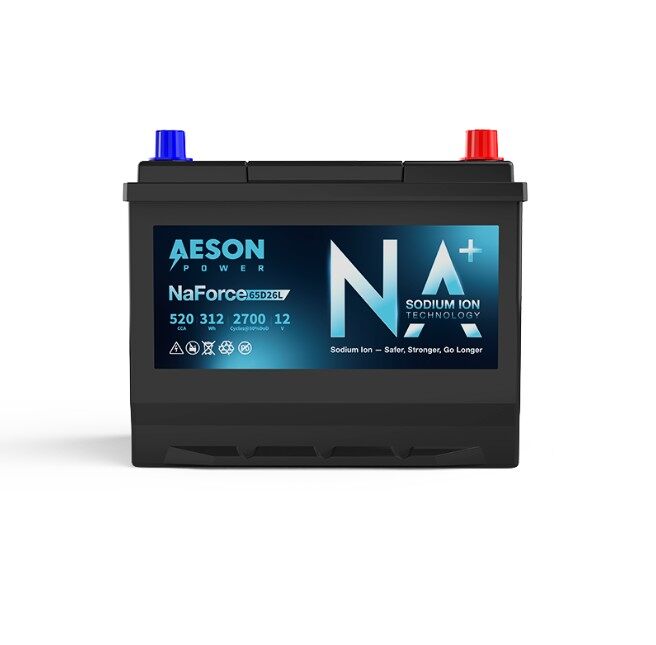
For vehicle manufacturers, distributors, and automotive solution providers, understanding how start-stop cycling affects battery performance is essential when selecting the right battery technology. We develop sodium-ion battery solutions designed to address these challenges by improving cycle durability, temperature adaptability, and overall reliability for demanding automotive applications.
Why Start-Stop Systems Create Higher Battery Demands
Traditional vehicle batteries mainly support engine ignition and electrical systems when the engine is running. In comparison, start-stop vehicles automatically shut down the engine during idling and restart it when necessary. This process can happen dozens or even hundreds of times during daily driving, depending on traffic conditions and driving habits.
Each restart requires the battery to deliver high instantaneous current. At the same time, the battery must quickly recover energy through charging. This repeated cycle creates additional stress on internal battery components, which can accelerate degradation if the battery technology is not designed for frequent cycling.
For automotive partners, battery selection is no longer only about initial starting capability. Cycle life, charging efficiency, operating temperature range, and long-term stability have become important factors that directly influence vehicle reliability and customer experience.
The Relationship Between Cycling Frequency and Battery Lifespan
Frequent start-stop operation subjects the battery to high-frequency charge and discharge cycles, often under partial-state-of-charge (PSoC) conditions. Over time, these repeated operating conditions can accelerate changes in the battery’s internal materials, reducing its ability to store and deliver energy effectively. As a result, available capacity and starting performance may gradually decline, shortening overall battery life.
Lead-acid batteries have traditionally been widely used in passenger vehicles, but frequent start-stop environments require enhanced designs such as AGM batteries or other advanced technologies. These solutions improve cycling capability compared with conventional batteries, but automotive manufacturers and distributors are increasingly exploring alternative technologies with longer service potential.
Sodium-ion batteries provide another approach for applications that require frequent cycling. As a sodium-ion battery factory, we focus on developing battery solutions designed to withstand repeated charge and discharge cycles, with safety and temperature adaptability suited to modern automotive requirements.
How Sodium-Ion Technology Supports Start-Stop Applications
The development of sodium-ion technology has created new possibilities for automotive battery applications. Sodium-ion batteries use sodium-based materials instead of lithium-based materials, offering different characteristics in terms of safety, thermal stability, and resource availability.
For passenger vehicles, stable starting performance is a key requirement. Our sodium-ion automotive battery solutions are designed to provide high-rate output and reliable engine starting capability, including performance in low-temperature environments. This helps vehicles maintain dependable operation in regions with challenging weather conditions.
Temperature adaptability is another important consideration. Vehicles may operate in hot summers, cold winters, and constantly changing environments. Our sodium-ion battery technology supports a wide temperature range, helping maintain consistent performance from approximately -40℃ to 80℃.
Improving Vehicle Reliability Through Longer Cycle Life
A battery’s cycle life directly affects replacement frequency and maintenance costs. For fleet operators, automotive manufacturers, and distributors, shorter battery replacement intervals can increase operating expenses and reduce customer satisfaction.
Start-stop vehicles require batteries that can withstand repeated high-frequency cycling without significant performance loss. Sodium-ion battery solutions are designed with deep-cycle capability and stable performance, helping support longer service periods in demanding applications.
In addition to cycle durability, battery safety is another important factor. Sodium-ion technology offers strong thermal stability, reducing the risk of safety issues caused by extreme operating conditions. This makes it suitable for automotive environments where reliability and long-term use are critical.
Compatibility and Practical Value for Automotive Markets
When introducing new battery technology, compatibility is an important consideration for manufacturers and distributors. A solution that can integrate smoothly into existing vehicle applications creates fewer barriers for market adoption.
We design automotive sodium-ion batteries with practical installation requirements in mind. Suitable solutions can serve as alternatives to traditional lead-acid batteries in corresponding applications, allowing customers to consider replacement options when voltage, dimensions, terminal layout, CCA, and charging requirements are properly matched.
Beyond technical performance, overall operating cost also influences purchasing decisions. Longer lifespan, reduced maintenance needs, and slower degradation can help customers achieve better value throughout the battery lifecycle.
Building Reliable Automotive Battery Supply for Global Partners
For international automotive markets, product performance must be supported by stable manufacturing capability. Distributors and vehicle-related businesses need suppliers that can provide consistent quality, dependable delivery, and professional technical support.
At Aeson Power, we combine sodium-ion technology development with manufacturing experience to support global partners. Our focus is not only on creating advanced battery solutions but also on ensuring product consistency and supply reliability for commercial applications.
As vehicle technology continues to evolve, battery requirements will continue changing. Partners need solutions that can meet current start-stop demands while preparing for future automotive energy trends.
Supporting the Future of Passenger-Car Battery Technology
Frequent start-stop cycling has changed how the automotive industry evaluates battery performance. A battery must now deliver repeated power output, withstand intensive cycling, and operate reliably across different environments.
We believe sodium-ion technology provides valuable opportunities for the next generation of automotive battery solutions. Through continuous research, quality control, and application-focused development, we aim to support vehicle manufacturers and distributors with dependable energy products.
Working with an experienced sodium-ion battery factory allows automotive partners to access stable supply, advanced technology, and solutions designed for real-world driving conditions. With the development of smarter and more efficient vehicles, reliable battery technology will remain a key factor in improving transportation performance worldwide.