









Frequently Asked Questions
-
What technical advantages does the Aeson Power 12V sodium-ion auxiliary battery have in extremely cold climates?
In extremely cold environments, conventional lithium batteries (such as lithium iron phosphate) face difficulties charging below 0°C due to increased electrolyte viscosity and surging impedance.
At -20°C, their output power and capacity typically plunge by more than 30%, which can easily lead to electric vehicles failing to wake up in winter. On the other hand, because sodium-ion batteries possess lower solvation energy and interfacial impedance, they can still release over 90% of their capacity at -20°C while maintaining excellent discharge and charge acceptance capabilities. They can continuously provide high levels of cold cranking current, completely eliminating breakdowns in winter caused by the auxiliary power source "losing temperature." -
Compared to lithium batteries, what makes the Aeson Power 12V sodium-ion auxiliary battery safer?
In terms of safety performance, when conventional lithium batteries are subjected to nail penetration, crushing, or internal short circuits, they are highly prone to thermal runaway caused by lithium dendrites precipitating and piercing the separator, posing a risk of fire or even explosion.
In contrast, sodium-ion batteries have a higher thermal runaway onset temperature, and the unique structure of the hard carbon anode naturally suppresses dendrite growth. They exhibit a "no smoke, no fire, no explosion" performance in extreme abuse tests such as overcharging, over-discharging, nail penetration, and impact. Their intrinsic safety is significantly superior to conventional lithium batteries, providing a higher level of full-lifecycle safety assurance for the low-voltage systems of new energy vehicles. -
What is the charging voltage? What is the full charging voltage?
Charging voltage range: 14.4~14.8 V. Recommended maximum charging voltage is 14.6V (12V).
Usually the open circuit voltage is between 13~14.5V after fully charged and rest for about 30min.
-
What is the auxiliary battery?
An auxiliary battery is a low-voltage battery, typically 12V, used in vehicles to power various electrical systems. It is widely applied in new energy vehicles (EV) .
-
What does an auxiliary battery do?
In electric vehicles (EVs), it provides stable 12V power to the vehicle’s “house” systems and is responsible for controlling the high-voltage contactors (relays) that connect or disconnect the main traction battery. Even when the main high-voltage battery is fully charged, the vehicle may not start properly if the auxiliary battery is dead.
-
What Is an Auxiliary Car Battery in an EV?
An EV auxiliary battery is a low-voltage rechargeable battery that powers the vehicle’s control systems, safety equipment, lighting, locks, displays, and other electronics. Unlike the high-voltage traction battery, the auxiliary battery does not power the electric motor. Instead, it provides the low-voltage power needed to activate the vehicle’s high-voltage system.
-
What Does an Auxiliary Car Battery Do in an EV?
When the EV is parked or starting up, the auxiliary car battery supplies power to the vehicle’s low-voltage electronics and control units. It also powers the contactors that connect the high-voltage traction battery.
-
What Voltage Is an EV Auxiliary Battery?
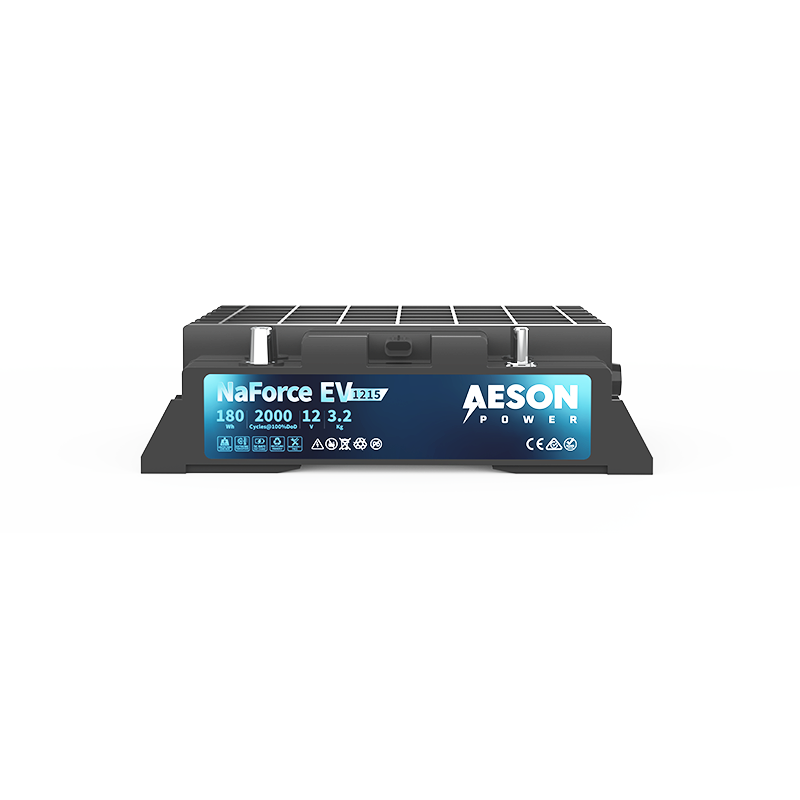
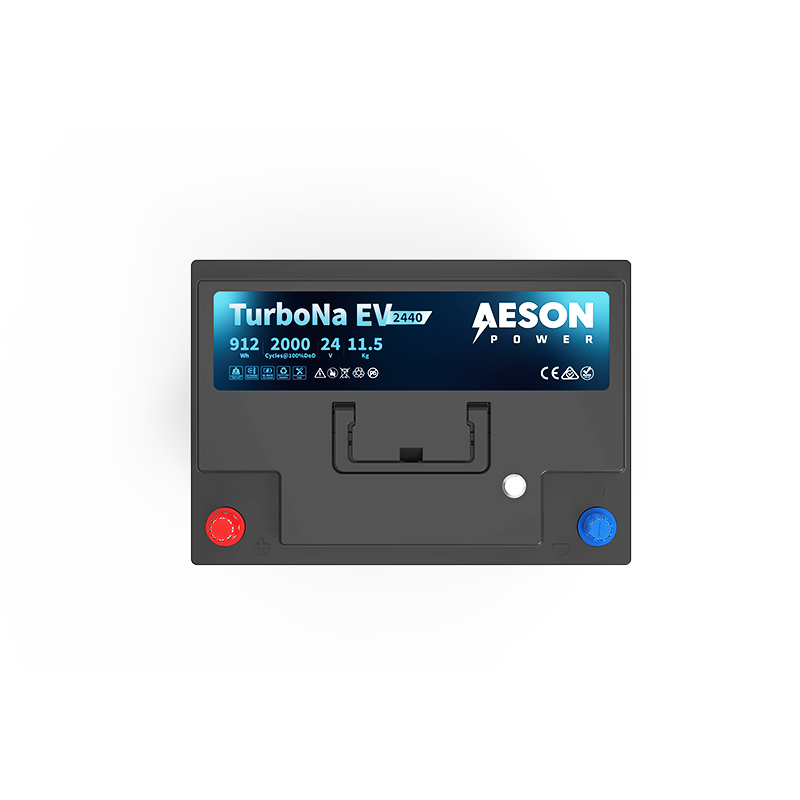
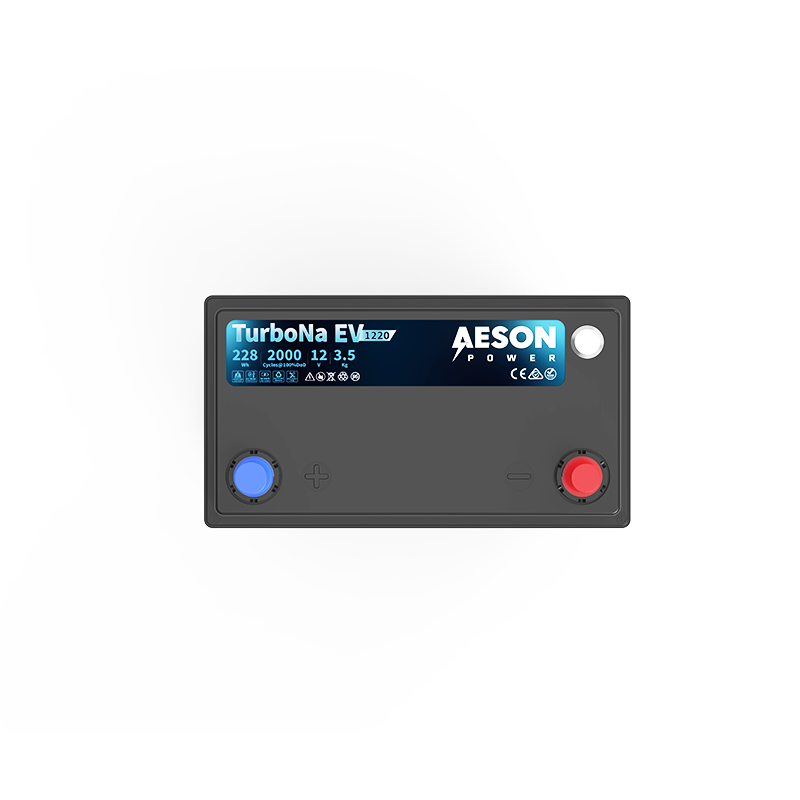
Most electric passenger cars use a 12 V auxiliary battery, while some electric commercial vehicles use a 24 V system. Aeson Power offers the 12 V 1215 for electric passenger cars and the 12 V 1220 and 24 V 2440 for electric commercial vehicles. The battery voltage must match the vehicle’s original low-voltage system.
-
How Do I Choose the Right Aeson Power EV Auxiliary Battery?
Aeson Power EV auxiliary batteries are developed in close collaboration with vehicle OEMs to ensure precise matching with each model's requirements. We support customized solutions for both 12V and 24V low-voltage systems, tailored to your vehicle's specific specifications.
Please contact our sales team with your vehicle model or OEM battery specifications, and we will recommend or develop the optimal sodium-ion auxiliary battery solution for you.
-
What are the main functions of the Aeson Power 12V sodium-ion automotive start-stop battery?
Start-stop batteries possess all the functions of a starting battery within the vehicle. Additionally, when the vehicle is stationary and the engine is not running, they supply energy to various electrical appliances on board; when the engine stops, they must ensure that the complete electronic system functions normally, including the power required for the next start.
-
Sodium battery charging time?
The charging time is related to the charging voltage and the charging current. For example, with 0.2C current and 14.6V voltage, the full charge time is about 5.5h; while with 1C high current, it isabout 1.1h. Normally, the charge voltage reach the limit value and last for 6-10min means it fully charged.
-
What is the discharge voltage (working voltage, i.e., closed circuit voltage in work) of sodium battery?
The discharge voltage is related to the size of the load and the SoC state of the battery. Thesmaller the load, the higher the voltage; the higher the SoC, the higher the voltage.
The closed-circuit voltage range of a new battery for start-stop use is between 9 and 12V, and thevoltage will gradually drop during usage.
-
Do sodium batteries require maintenance?
Sodium-ion starter batteries are a fully sealed & maintenance-free design, so these are similar to those of lead-acid AGM battery types. The original meaning of the English term MF(Maintenance Free) in the lead-acid battery terminology is that it does not require regular topping.
-
How are sodium batteries recycled?
Since sodium-ion starting batteries are a new technology and still in the stage of continuousimprovement, there is no comprehensive recycling standards and regulations yet, the relevantrecycling specifications are basically still referred to lithium-ion batteries, and it is recommended to consult the local professional organizations at present.
-
Are sodium batteries considered dangerous goods in transportation?
Yes, now basically refer to lithium-ion products regulation.
-
How to operate the sodium battery after over-discharged?
It is recommended to place it in 5~35℃ environment, and then recharge it according to therecommended method. In order to better protect the battery and avoid the damage caused byover-discharge, please recharge it if the battery voltage is less than 1ov.
-
How do I maintenance a sodium-ion battery during long time storage?
Short-term storage (1-3 months): generally no special maintenance is needed. Regularvoltage checks are recommended in higher temperatures (>35°C) to prevent excessiveself-discharge.
Medium-term storage (3-6 months): Possible 5%~20% capacity loss; check voltage every 3months. Recharge if the voltage drops to 10V per 12V.
Long-term storage (6 months or more): Possible 20%~40% capacity loss; recommendingCharge to 40%~60%soC to prevent irreversible damage for long time storage management..