










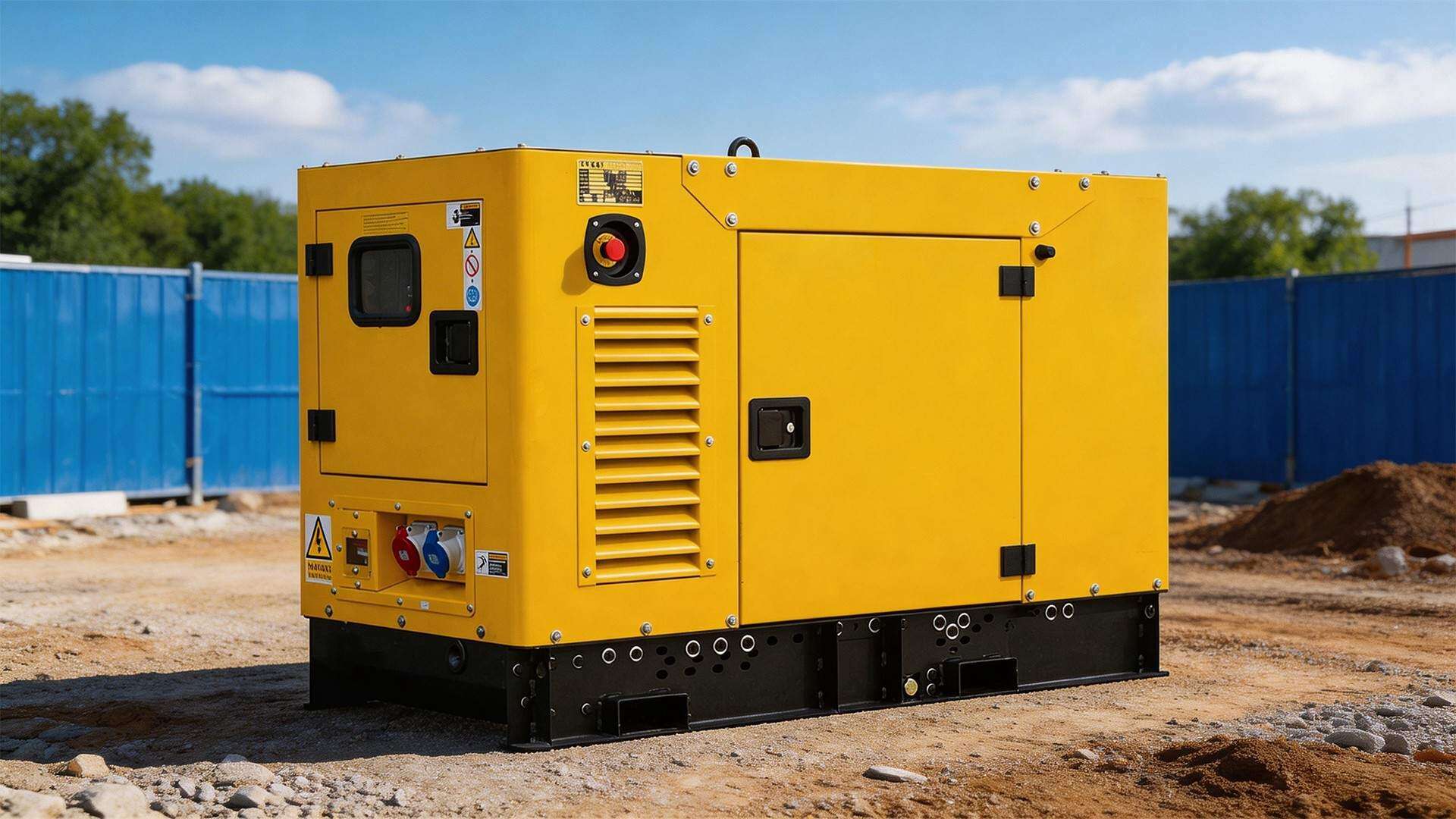
A diesel generator may sit idle for weeks and then be expected to start immediately during a power outage or critical event. That operating pattern makes battery selection fundamentally different from choosing a battery for everyday cycling. We evaluate a diesel generator battery by four practical factors: system voltage, cranking power, usable capacity, and temperature performance. For business buyers, these specifications determine whether the generator can deliver dependable backup power when it matters most.
Start with the Generator’s Required Voltage
Voltage is the first specification we verify because the battery must match the generator’s starting system and charging architecture. Depending on the generator design, the starting circuit may use a 12V or 24V battery configuration. Some commercial generator sets use two 12V batteries in series to provide 24V starting power.
We therefore recommend checking the generator manufacturer’s documentation before selecting a replacement. The battery voltage, terminal arrangement, physical dimensions, and charging system must all be compatible. A correct voltage match establishes the foundation for safe starting and proper recharge. Generator specifications can vary significantly, so we avoid assuming one voltage fits every installation.
Prioritize CCA for Diesel Engine Starting
Cold cranking amps, or CCA, indicate a battery’s ability to deliver high current during engine starting under a defined test condition. For diesel generator sets, this is particularly important because compression ignition engines require substantial cranking power to turn the engine and establish combustion.
We do not recommend choosing solely by nominal capacity. A battery with ample stored energy can still be unsuitable if its starting current is insufficient. We compare the generator manufacturer’s required CCA with the battery’s tested rating and allow appropriate margin for the site’s operating conditions. For example, Engine OEMs specify minimum CCA requirements for individual generator models, demonstrating why battery selection must begin with the generator’s own requirements.
Match Capacity to the Generator’s Duty Cycle
Capacity is another important specification, but we view it differently from CCA. Capacity represents how much electrical energy the battery can store, while CCA addresses short-duration starting output. A generator battery therefore needs enough capacity to support the starting system, controls, and repeated start attempts without being oversized without purpose.
For standby generators, we also consider how frequently the generator may be called to start, the charging system’s recovery capability, and how long the battery may remain in standby. Generator manufacturers recommend checking battery condition and state of charge as part of generator maintenance, underscoring the importance of battery readiness even when the engine is not running.
Temperature Can Decide Whether the Generator Starts
Extreme temperature is one of the most important considerations for generator batteries. Cold conditions can reduce battery performance, while high temperatures can accelerate degradation. Generator manufacturers note that low temperatures slow chemical reactions, increase resistance, and reduce battery power output, which can make starting more difficult.
Our sodium-ion solution for diesel generator sets is designed around this challenge. Aeson Power specifies operation across -30°C to 80°C, with no heating required at -30°C. For generators installed outdoors, in remote facilities, or in regions with severe seasonal temperatures, this wide operating window can provide an important reliability advantage.
Consider Maintenance and Long-Term Readiness
Standby generators are unusual because their batteries spend much of their lives waiting for an emergency. A battery can therefore fail because of poor state of charge, aging, corrosion, or inadequate maintenance before the generator is ever called upon.
We focus on long-term maintenance-free operation for our sodium-ion generator solution. This can help simplify battery management for businesses operating multiple generator sets across facilities. Nevertheless, we still recommend following the generator OEM’s inspection, charging, and replacement requirements because battery compatibility and system maintenance remain essential.
Why Sodium-Ion Fits Critical Generator Applications
We see sodium-ion technology as particularly promising for diesel generator sets that demand high-rate starting, wide-temperature performance, and dependable readiness. Aeson Power’s sodium-ion technology uses a polyanionic cathode framework designed for high-rate performance and thermal stability. Our broader portfolio also covers automotive starting and start-stop, commercial vehicles, racing, EV auxiliary power, UPS, and energy storage applications.
For business procurement teams, this broader manufacturing experience matters. We combine product engineering with factory-direct supply, rigorous quality control, and secure supply chains to support consistent battery availability for different application requirements.
Aeson Power Helps You Choose the Right Starting Solution
Selecting a diesel generator battery should begin with the generator’s electrical architecture and operating environment, not simply the lowest purchase price. We recommend confirming voltage first, matching CCA to the engine’s starting requirement, sizing capacity for the duty cycle, and then evaluating temperature range, maintenance, physical fit, and charging compatibility.
At Aeson Power, we develop high-rate sodium-ion solutions for diesel generator sets, engineered for instant high-current cranking from -30°C to 80°C, with no heating required at -30°C and long-term maintenance-free operation. We also provide factory-direct sodium-ion, lead-acid, and lithium-ion batteries for diverse applications. Contact Aeson Power to discuss your generator model, starting requirements, and operating conditions, and let us help you select the right battery solution.