










Modern electric vehicles rely on more than their high-voltage traction batteries. Behind the propulsion system is a low-voltage network that supports essential electronics and helps the vehicle transition safely between operating states. For fleet operators, EV manufacturers, and system integrators, selecting the right auxiliary car battery is therefore a reliability decision, not simply a specification exercise. We see sodium-ion technology becoming increasingly relevant because it combines practical low-voltage performance with a lightweight, maintenance-free design.
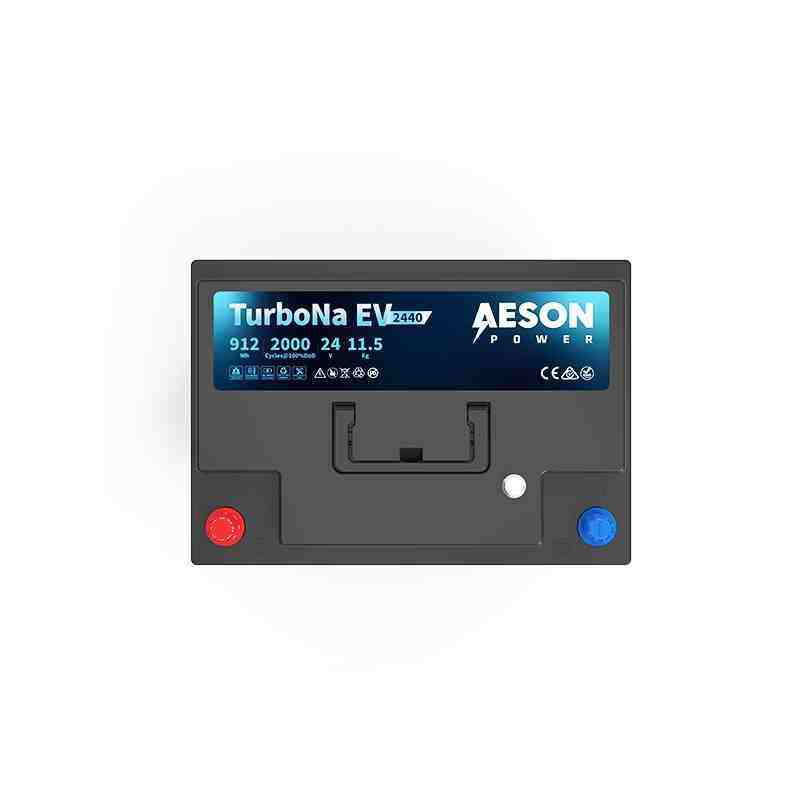
The Auxiliary Battery Behind Essential Vehicle Functions
We need to distinguish the traction battery from the auxiliary battery. The high-voltage battery supplies the electric motor, while the 12V system powers low-voltage functions such as lighting and instrumentation. Modern EVs commonly use a DC-DC converter to step down high voltage and replenish the low-voltage battery. This architecture makes the auxiliary battery an important part of the vehicle’s electrical infrastructure.
For commercial fleets, this distinction has operational consequences. A traction battery can still hold substantial charge while a weak low-voltage battery prevents the vehicle from entering its normal ready state. We therefore treat auxiliary power as part of the overall electrical reliability chain. For vehicle manufacturers and fleet managers, this perspective helps shift battery selection from a simple replacement decision toward a system-level safety and availability consideration.
Aeson Power’s technical guidance explains that its EV auxiliary battery provides stable 12V power for the vehicle’s low-voltage systems and helps control the high-voltage contactors that connect or disconnect the main traction battery. If the auxiliary battery is depleted, an EV may fail to start even when the high-voltage battery remains fully charged.
How an Auxiliary Car Battery Supports Safety
Safety-related vehicle electronics depend on dependable low-voltage power. Instrumentation, lighting, control electronics, and other low-voltage loads need a stable supply to operate as designed. We therefore evaluate an auxiliary battery not only by energy capacity, but also by voltage stability, environmental performance, installation constraints, and lifecycle requirements.
The role becomes even more important during transitions between vehicle states. The auxiliary battery can support the control path that enables high-voltage contactors to connect or disconnect the traction system. We should not describe the auxiliary battery as a replacement for the vehicle’s safety architecture, but as one component that helps keep essential low-voltage and control functions available.
Why Sodium-Ion Is Gaining Attention for EV Auxiliary Systems
As a sodium-ion battery company, we see several reasons for considering sodium-ion technology in low-voltage EV applications. Aeson Power’s EV auxiliary range includes 12V and 24V sodium-ion batteries designed for electric passenger cars and commercial vehicles. The technology is particularly attractive where weight, maintenance, temperature behavior, and lifecycle considerations matter.
Sodium-ion also offers an alternative chemistry for buyers evaluating different battery technologies. Aeson Power highlights excellent thermal stability, structural stability, and superior cycle life as core advantages of its sodium-ion technology. For business procurement teams, these characteristics can support a broader evaluation of reliability and operating suitability rather than focusing only on upfront battery cost.
The Aeson Power 1220 for Electric Commercial Vehicles
Our 1220 auxiliary battery is designed for electric commercial vehicle applications. It provides 12V voltage and 228Wh energy, with dimensions of 238 × 130 × 200(222) mm and a weight of 3.5 kg. These specifications give vehicle engineers a defined package to evaluate against available installation space and low-voltage system requirements.
The 1220 is also designed to be 60% lighter than a traditional lead battery. It is maintenance free and recycling friendly. These characteristics can be valuable for commercial vehicle operators managing many units, because lower battery mass can simplify installation and handling while maintenance-free operation can reduce routine service requirements.
What Procurement Teams Should Evaluate Before Switching
We recommend starting with system compatibility rather than chemistry preference. Buyers should verify nominal voltage, charging voltage, electrical interfaces, physical dimensions, energy requirements, and the vehicle’s DC-DC charging architecture. A replacement battery should be validated against the vehicle manufacturer’s requirements before deployment.
Operating environment should receive equal attention. Fleet vehicles may face extended duty cycles, temperature extremes, vibration, and long periods of operation. We should also assess maintenance procedures, service accessibility, expected lifecycle, and end-of-life handling. A technically promising battery only creates business value when it fits the complete vehicle system and operating model.
Aeson Power: Supporting Safer Low-Voltage EV Architecture
We are Aeson Power, a sodium-ion battery company developing battery solutions for transportation and other demanding applications. Our portfolio includes automotive start-stop, automotive starting, commercial starting, racing car starting, EV auxiliary, and UPS batteries, alongside customized sodium battery, transportation, and reserve solutions.
Our EV auxiliary range is built around practical 12V and 24V requirements for electric passenger and commercial vehicles. For businesses evaluating an auxiliary car battery for a new EV platform, fleet program, or commercial vehicle application, we can provide factory-direct sodium-ion solutions alongside lead-acid and lithium-ion options. Contact Aeson Power to discuss your voltage, energy, dimensions, and application requirements.