










When we rely on a portable or standby generator, the starting battery is easy to overlook until the engine fails to crank. We use this battery to supply the high current needed by the starter motor so the engine can begin running. For reliable backup power, we therefore choose the battery around the generator’s electrical requirements, environment, charging system, and duty cycle.
Why We Need the Right Battery for Generators With Electric Start
When we select a battery for generators with electric start, we first follow the generator manufacturer’s required specification. We do not choose by physical size alone. Voltage, cold cranking amps (CCA), capacity, terminal layout, dimensions, and charging compatibility all matter.
We can see how requirements vary in current generator specifications. Generator starting requirements can vary by equipment, so we verify the required voltage, cranking performance, capacity, dimensions, terminal layout, and charging compatibility before selecting a battery.
This is why we begin with the owner’s manual or equipment specification. We consider the required cranking performance and capacity together with temperature, vibration, cycling, and charging conditions.
How We Separate Portable and Standby Generator Needs
For a portable generator, we often need a compact battery that can deliver enough starting current after periods of storage. We also consider how we will maintain the battery between uses, because charge condition and storage temperature can affect whether it will crank when needed.
For a standby generator, we focus more heavily on readiness. We may leave these units stationary for months while waiting for a utility outage. In many designs, we rely on an integrated charger to maintain the starting battery. For standby applications, we also check whether the battery is compatible with the generator’s integrated charging system.
We therefore check whether the replacement battery is compatible with the generator’s charging strategy. We avoid assuming that one battery chemistry can directly replace another without confirming voltage limits, charge behavior, control requirements, and manufacturer approval.
Which Battery Specifications Do We Check First?
We start with system voltage because the battery must match the generator’s starter and charging system. We commonly see 12V starting systems in small and residential generators, but we always verify the actual equipment specification.
Next, we look at CCA or another specified cranking-current rating. We know that starting an engine requires a short burst of high current, so we treat the generator manufacturer’s minimum cranking requirement as a baseline, especially where low temperatures make starting more difficult.
We also check battery dimensions, terminal orientation, mounting space, cable reach, and connection type. Finally, we consider whether we expect the generator to face sub-zero winters, hot enclosures, frequent starts, vibration, or long standby periods.
Why We Consider Sodium-Ion Technology for Generator Starting
For generator starting, we value high-rate discharge because the starter motor demands substantial current over a short period. We also value dependable performance across temperature changes, particularly when we are supporting emergency or industrial equipment.
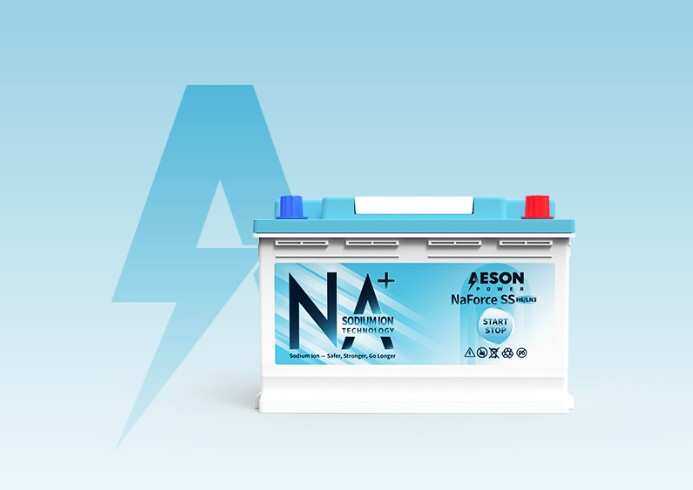
At Aeson Power, we have developed a customized high-rate sodium-ion solution for diesel generator sets. On our official custom-battery page, we describe it as engineered for high-current cranking from -30°C to 80°C, with no heating required at -30°C and a long-term maintenance-free design.
We do not treat these characteristics as a reason to ignore compatibility. We still need to match starting current, system voltage, enclosure, charging system, installation space, and operating conditions to the generator platform.
How We Approach Sodium Ion Battery Manufacturing for Generator Projects
In sodium ion battery manufacturing, we see generator starting as a system-matching task rather than simply a cell-selection exercise. We first identify the engine, starter voltage, cranking demand, environmental range, dimensional limits, and charging profile.
From there, we can evaluate cell configuration, electrical design, protection, packaging, and integration. We recognize that a compact portable generator may have very different size and storage constraints from an industrial diesel standby set, so we do not apply one configuration to every project.
How We Make the Final Battery Choice
Before we approve a generator starting battery, we confirm the generator manufacturer’s specifications and compare them with the proposed battery design. We check voltage, cranking performance, charging compatibility, physical fit, terminals, temperature exposure, storage conditions, and expected start frequency.
For an existing generator, we also review the original battery label and service manual. For an OEM or new generator project, we prefer to evaluate electrical and mechanical requirements early so battery integration becomes part of the system design.
Work With Us at Aeson Power
At Aeson Power, we are an Australian battery company focused on next-generation sodium-ion technology, with solutions spanning automotive starting, commercial vehicles, EV auxiliary systems, UPS applications, and customized batteries. We combine sodium-ion battery development with large-scale manufacturing capability and international supply support.
For generator applications, we focus on high-rate sodium-ion starting solutions, temperature resilience, customization, and manufacturing scale. If you are selecting a starting battery for a portable generator, standby generator, diesel generator set, or OEM program, send us your voltage, cranking requirement, dimensions, charging information, and operating conditions. We can help evaluate a suitable Aeson Power solution for your project.