






Moving a battery chemistry from a laboratory result to a repeatable commercial product is a sequence of engineering decisions. Materials must stay consistent, cell designs must survive larger equipment, process windows must be defined, packs must match real applications, and quality control must hold as output increases. At Aeson Power, we see scale as the point where electrochemistry, manufacturing, and application engineering must work together.
A Lab Cell Is Only the Starting Point
Early research asks whether a chemistry can deliver the required electrochemical behavior. Manufacturing asks a different question: can thousands of cells be made with sufficiently consistent performance using controlled, repeatable processes?
That change matters for sodium-ion technology. Industrial reviews identify electrode materials, electrolytes, stability, and full-cell optimization among the issues affecting commercialization. Hard-carbon production adds variables such as precursor selection, carbonization, and post-treatment.
For companies making sodium-ion batteries, the transition therefore depends on more than an attractive result in a coin cell or prototype. Material specifications, incoming inspection, mixing, coating, drying, formation, and final testing all need operating windows that production teams can reproduce.
Repeatability Has to Be Proven Before Volume Rises
Scale-up often exposes variations that are less visible in small batches. A formulation may behave differently when mixing volume increases. Electrode coating uniformity may shift with web speed or slurry properties. Moisture sensitivity may change handling requirements. Formation protocols may also need adjustment for production throughput.
These are part of turning research into a controlled manufacturing process. Commercialization studies discuss scale-up considerations around active-material synthesis, storage, slurry coating, electrode loading, and supply-chain readiness.
Our R&D team notes that moving from laboratory prototypes to mass production requires repeated optimization because consistency and stability become critical during scale-up. Production readiness should therefore be judged by repeatability, not by one high-performing sample.
What Companies Making Sodium-Ion Batteries Must Lock Down
Before higher output becomes useful, the product itself must be defined. Chemistry, cell format, voltage window, capacity targets, discharge behavior, temperature range, pack configuration, BMS logic, enclosure, interfaces, and test methods all influence the finished system.
The definition also depends on application. An automotive starting battery is designed around high-current cranking and vehicle charging conditions. A UPS battery is evaluated around backup duty and discharge requirements. A commercial energy-storage system introduces different voltage, communication, cooling, and system-level controls.
This application-first approach helps avoid producing cells at volume before the target product has been sufficiently validated. At Aeson Power, our sodium-ion portfolio spans automotive starting and start-stop batteries, commercial starting, racing applications, EV auxiliary products, UPS batteries, energy storage, and custom systems.
Production Engineering Comes Before Production Numbers
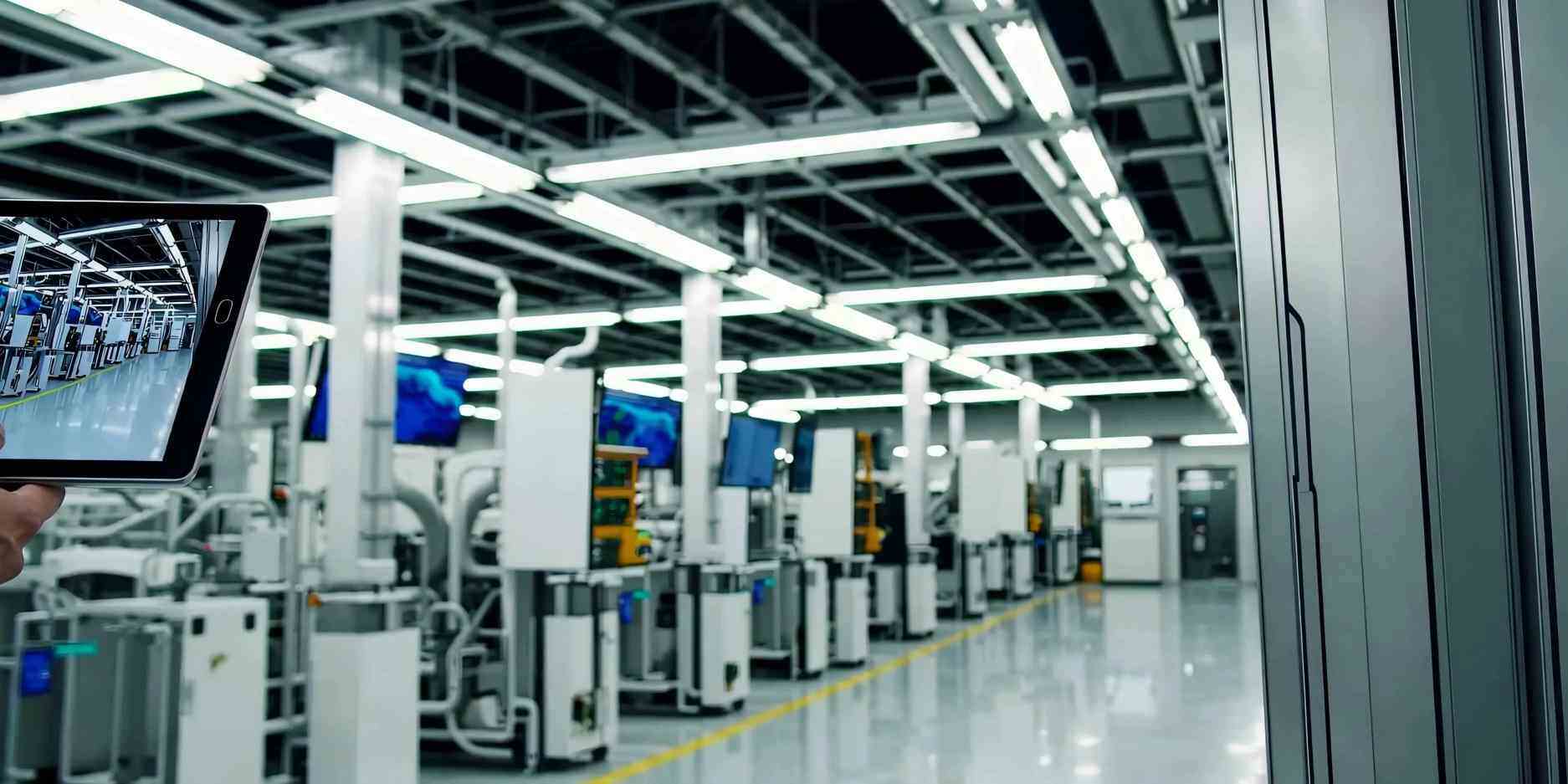
For companies making sodium-ion batteries, a larger factory does not automatically create a mature product. Equipment capability, process control, traceability, inspection, and quality criteria determine whether higher volume preserves the characteristics established during development.
Our broader manufacturing network includes seven manufacturing centers, 90 production lines, and 30 GWh of annual production capacity across our battery activities. Those figures describe our overall manufacturing capabilities rather than sodium-ion-only capacity, an important distinction when discussing the scale of an emerging chemistry.
For custom sodium-ion projects, our official product information describes end-to-end control from R&D to mass production, alongside structural and electrical integration and BMS co-customization. Scale-up is therefore connected to the pack and application rather than treated solely as a cell-production exercise.
Validation Changes as the Product Gets Closer to Market
Prototype testing usually begins with core electrical behavior. Commercial validation becomes broader. The battery may need evaluation under temperature extremes, repeated high-current events, charging profiles, vibration, communication requirements, storage conditions, or other stresses determined by its intended use.
The goal is to test the product against the environment it will actually face, especially in automotive, industrial, backup-power, and custom applications where duty cycles differ.
Specifications must also remain tied to the exact model being supplied, because different applications place different demands on battery performance. For example, our SIBPOM-12100 is designed for UPS applications, where rated capacity and backup performance are key considerations, while the 24-20A commercial starting battery is specified at 24 V, 480 Wh, and 450 A CCA to support high-current starting requirements.
Supply Chains Have to Scale With the Factory
Mass production also depends on material availability and stable supplier quality. The International Energy Agency notes that sodium-ion supply chains remain less developed than lithium-ion supply chains, even as the technology enters a broader scale-up phase.
That makes supplier qualification, material consistency, inventory planning, and multi-stage quality control part of commercialization. A technically strong cell can still become difficult to manufacture consistently if precursor properties vary or components are unavailable at the required quality and volume.
Downstream systems matter too. Technical documentation, product matching, after-sales processes, and field feedback become more important once production leaves the pilot stage. Scaling is therefore an organizational task as much as a factory task.
Mass Production Is a Controlled Continuation of R&D
Among companies making sodium-ion batteries, we approach that connection through application-focused development and a manufacturing partnership with Xupai Group. Our wider network supports factory-direct battery supply while our sodium-ion work covers material selection, cell and pack engineering, BMS integration, and application-specific customization.
Aeson Power is an Australian battery technology company developing and supplying sodium-ion, lithium-ion, and lead-acid solutions for international markets. For customers moving from concept evaluation toward a manufacturable sodium-ion product, our focus is to connect engineering requirements with practical production capability.


