










Heavy-duty diesel trucks demand dependable starting power because large engines require substantial current during ignition. For fleet operators, OEMs, and automotive battery buyers, selecting a diesel truck battery means looking beyond nominal voltage. We need to consider cold cranking amps (CCA), battery dimensions, energy, vehicle architecture, operating conditions, weight, and maintenance requirements. These factors determine whether a battery can deliver reliable starting performance throughout demanding commercial operations.
Why High CCA Matters for Diesel Trucks
CCA is one of the most important specifications when we evaluate a starting battery for diesel applications. Diesel engines generally require strong cranking performance, particularly during cold starts. A high-CCA battery can deliver greater starting current, helping the starter motor turn the engine reliably when conditions are demanding.
We should not treat CCA as the only selection criterion, however. The battery must also match the vehicle’s required voltage, physical dimensions, terminal arrangement, charging system, and electrical architecture. For fleet purchasing, this compatibility check prevents a battery with impressive headline performance from being installed in an unsuitable vehicle.
Choosing the Right Battery for Different Truck Systems
Truck electrical systems vary significantly. Many heavy-duty commercial vehicles use 24V starting systems, commonly achieved with two 12V batteries connected in series. Other vehicles and lighter commercial platforms use 12V systems. We therefore need to identify the vehicle’s electrical architecture before specifying a replacement battery.
Our TurboNa series is designed around 24V commercial starting applications. Aeson Power states that its 24V sodium-ion battery can replace two externally connected 12V lead-acid or AGM batteries with one integrated pack. The series is intended for applications including diesel engines in construction machinery and generator sets, as well as light trucks and air compressors.
55D23L-Pro Delivers 520A CCA in a Compact Format
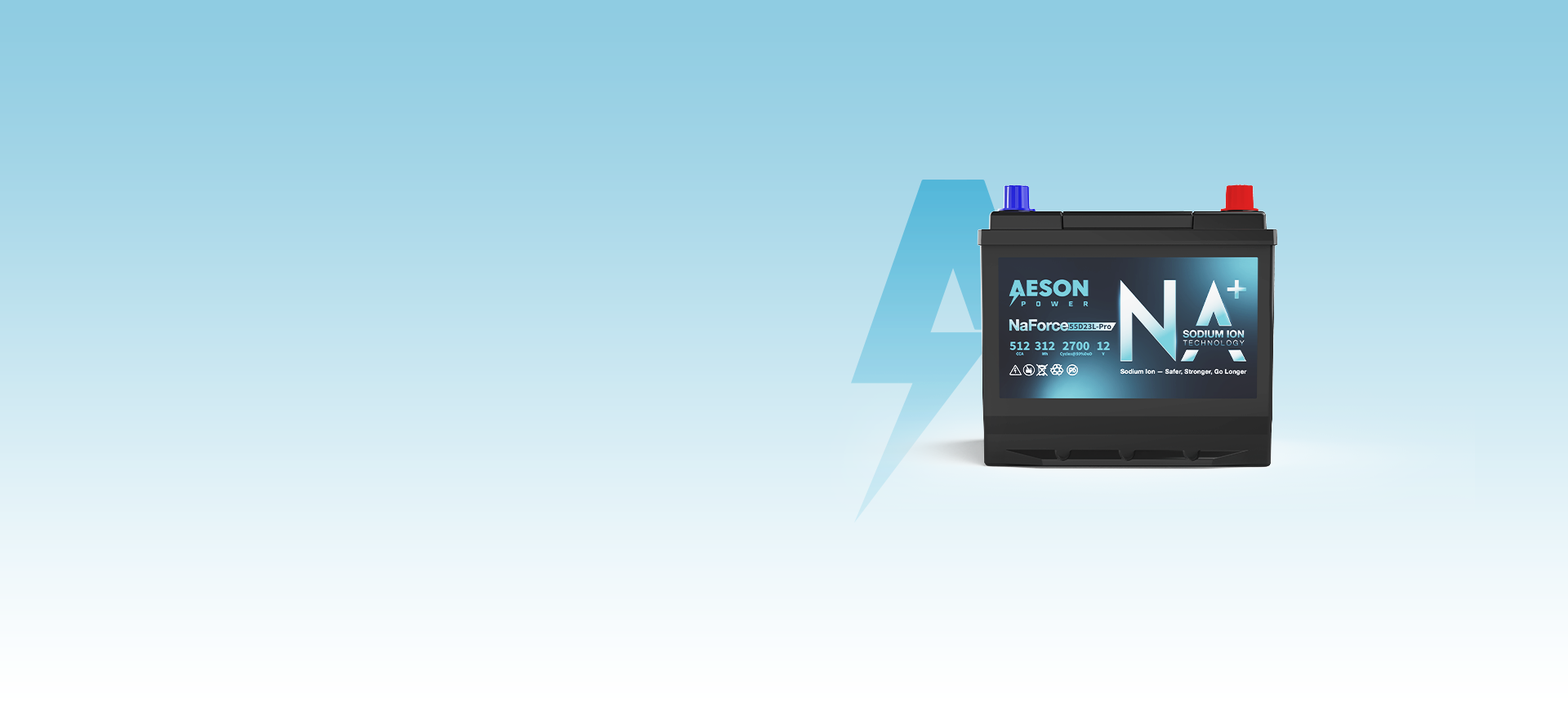
For vehicles requiring a 12V D23L-format battery, our 55D23L-Pro provides a high-CCA sodium-ion starting option. According to Aeson Power’s official specification table, it has a 12V nominal voltage, 520A CCA, and 312Wh energy. Its dimensions are 232 × 173 × 200 mm, with a total height of 220 mm including the terminal area, and its listed weight is 4.8 kg.
These specifications make the 55D23L-Pro suitable for buyers who need strong starting performance within the D23L case format. We should emphasize that it is not a universal replacement for every heavy-duty diesel truck. Instead, we should select it when the vehicle specifically calls for a compatible 12V D23L battery and the 520A CCA rating meets the application requirement.
Lower Weight Can Benefit Commercial Fleets
Weight is another factor we should consider when evaluating battery technology for commercial vehicles. Traditional lead-acid batteries contain substantial amounts of lead, making them relatively heavy. Aeson Power’s sodium-ion starting batteries are designed to be approximately 60% lighter than traditional lead batteries while maintaining high-rate starting capability.
For fleet operators, lower battery weight can contribute to easier handling during installation and replacement. It can also support broader vehicle-weight optimization strategies. We should nevertheless evaluate weight together with CCA, energy, dimensions, and duty cycle rather than selecting a battery based solely on its mass.
Maintenance and Operating Conditions Matter
Commercial trucks often operate for long hours and encounter demanding environments. A battery that requires regular maintenance can increase service workload across a large fleet. Our sodium-ion starting batteries use a fully sealed, maintenance-free design, reducing the need for routine topping or similar maintenance associated with conventional flooded lead-acid batteries.
Temperature is also important. Aeson Power’s sodium-ion starting battery platform uses a polyanionic framework designed for high thermal stability, with the automotive starting range specified for operation up to 80°C. This characteristic is particularly relevant when batteries are installed close to hot engine compartments and must continue delivering dependable starting performance.
How We Evaluate a Diesel Truck Battery
When specifying a diesel truck battery, we recommend a systematic evaluation based on operating demands rather than headline specs alone. Fleet managers should first confirm system voltage requirements, then verify physical case size and terminal layout against available tray space. Next, cross-reference engine cranking requirements with certified battery capacity, and finally assess expected ambient temperatures, maintenance schedules, and overall weight targets to ensure seamless operational compatibility.
For business buyers, this approach is more reliable than simply choosing the battery with the highest CCA. A technically appropriate battery should satisfy the vehicle’s starting requirements while also fitting the installation space and supporting the fleet’s operating and maintenance strategy.
Aeson Power Supports Commercial Starting Applications
At Aeson Power, we develop sodium-ion battery solutions for transportation and other demanding applications. Our portfolio covers automotive start-stop, automotive starting, commercial starting, racing-car starting, EV auxiliary, and UPS applications. For commercial customers, we combine high-rate sodium-ion technology with application-specific battery formats, including solutions for 12V and 24V starting systems.
We can help businesses compare battery specifications according to vehicle architecture, starting requirements, and operating conditions. If you are sourcing a high-CCA diesel truck battery or evaluating sodium-ion technology for commercial vehicles, contact Aeson Power to discuss your requirements and identify the appropriate starting-battery solution.