










Battery buyers are increasingly asking whether sodium-ion technology is ready to replace lead-acid batteries in demanding commercial applications. We believe the answer is yes in selected use cases, but not as a universal, immediate replacement. As a sodium-ion batteries manufacturer, we evaluate chemistry according to duty cycle, temperature, safety, footprint, maintenance, and total cost of ownership rather than relying on a single performance metric.
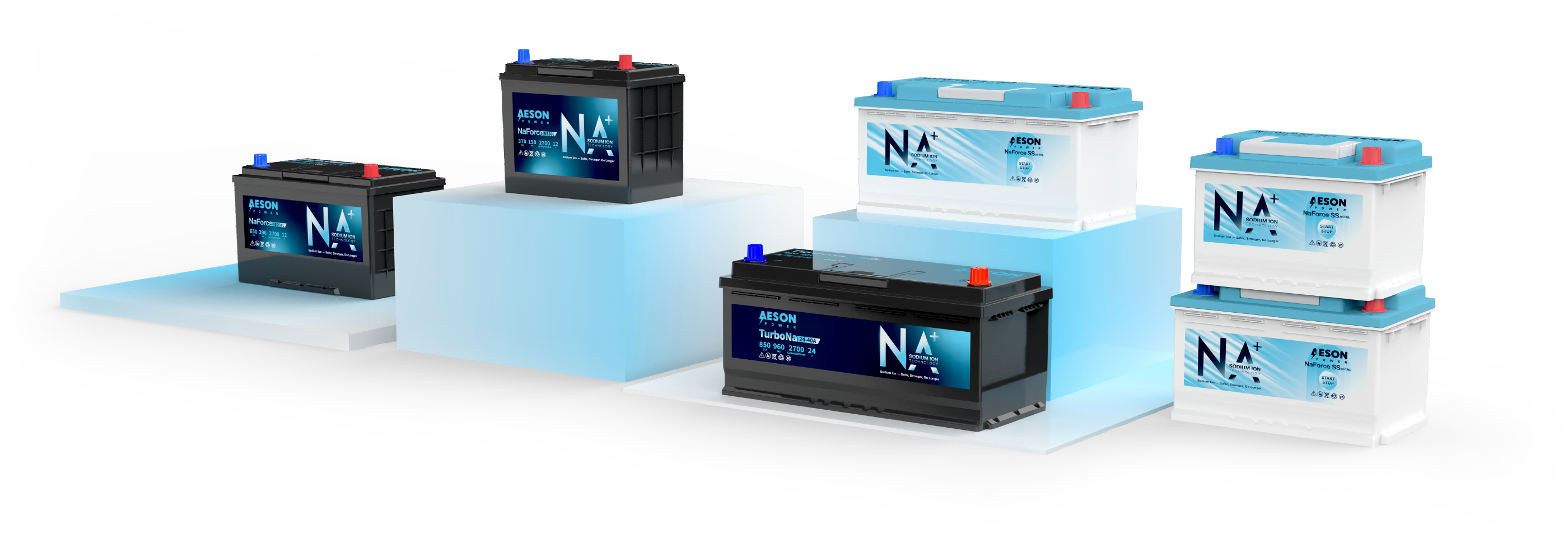
What We Evaluate as a Sodium-Ion Batteries Manufacturer
Lead-acid remains established because it is familiar, widely available, relatively inexpensive, and compatible with many existing systems. However, its limitations become more visible when equipment requires frequent cycling, high-rate operation, lower weight, or operation across wider temperatures.
Independent data supports the opportunity. IRENA reports typical sodium-ion energy density of 90–160 Wh/kg, compared with 25–50 Wh/kg for lead-acid, while estimated sodium-ion cycle life is 500–8,000 cycles versus 250–2,000 for lead-acid. Sodium-ion systems also show a wider reported working-temperature range. These figures vary by chemistry and application, so we recommend evaluating actual product specifications rather than comparing chemistry labels alone.
Where Sodium-Ion Can Replace Lead-Acid
We see the strongest replacement opportunities in applications where batteries are cycled frequently or must deliver dependable power under challenging conditions. These are environments where downtime can interrupt production, communications, transportation, or critical services, making predictable battery behavior more valuable than the lowest purchase price alone.
For example, Our SIBPOM-12100 is designed for UPS and standby/backup use. Its official product specification lists a 100Ah rated capacity, 11.4V nominal voltage, 100A continuous charging and discharging current, and dimensions of 332 × 172 × 221 mm. It supports charging from -10°C to 50°C and discharging from -45°C to 65°C, giving buyers a practical option for demanding backup environments.
Why the Application Matters More Than the Chemistry
We do not recommend replacing every lead-acid battery simply because sodium-ion is newer. Lead-acid can remain appropriate for applications with low cycling frequency, tight initial budgets, and existing infrastructure designed around conventional batteries.
Sodium-ion becomes more compelling when the buyer values longer service life, higher usable performance, reduced maintenance, high-rate response, or operation in extreme temperatures. IRENA’s technology brief indicates that sodium-ion batteries can achieve approximately 92% efficiency, while lead-acid ranges from 70% to 90%. For a frequently cycled system, efficiency and lifecycle performance can materially influence operating economics.
Safety and Supply Considerations
For business buyers, safety is not a marketing detail; it is an engineering and operational requirement. Aeson Power uses polyanionic NFPP technology in its sodium-ion products, emphasizing thermal and structural stability. Our UPS portfolio includes sodium-ion batteries designed for data centers, emergency backup, and other critical-power environments.
Supply resilience also matters when battery procurement is planned across multiple sites or markets. Sodium-ion technology uses sodium rather than lithium as its charge carrier, helping diversify battery material pathways. The IEA notes that sodium-ion batteries are gaining momentum and can reduce exposure to lithium supply risks, although the technology still faces challenges in energy density and supply-chain maturity.
How We Approach Sodium-Ion Battery Selection
We start with the application, not the battery chemistry. We review voltage architecture, capacity requirements, discharge profile, cycle frequency, ambient temperature, installation space, charging method, safety requirements, and expected service life. We then determine whether sodium-ion, lead-acid, or lithium-ion provides an optimal technical and commercial fit.
This approach is important because no chemistry wins every application. Our product portfolio covers sodium-ion batteries, bipolar pure lead batteries, and lithium-ion energy-storage solutions, supporting transportation, motive, reserve, and energy-storage scenarios. This allows us to recommend a technology based on operating requirements rather than forcing every customer toward one chemistry.
Choosing the Right Battery Partner for the Transition
For companies considering sodium-ion as a lead-acid alternative, supplier capability is as important as cell chemistry. Consistent manufacturing, quality control, engineering support, and supply continuity directly affect project reliability.
At Aeson Power, we combine sodium-ion innovation with factory-direct supply of lead-acid and lithium-ion batteries. Our manufacturing network includes seven manufacturing centers, 90 production lines, and 30 GWh of annual production capacity. We use rigorous quality control and secure supply chains to support consistent product delivery for global business customers.
A Practical Path Beyond Lead-Acid
Sodium-ion batteries are not a blanket replacement for lead-acid, but they are becoming a credible option where cycling, temperature, efficiency, safety, and lifecycle economics matter. We see particularly strong potential in UPS, telecom, commercial and industrial storage, and selected transportation applications.
At Aeson Power, we are a sodium-ion battery manufacturer focused on safe, high-quality battery solutions for evolving energy demands. We provide factory-direct access to sodium-ion, lead-acid, and lithium-ion technologies, backed by scalable manufacturing and quality control. If you are evaluating a lead-acid replacement, contact us to discuss your application and identify the battery chemistry that best fits your technical and commercial requirements.