





Replacing lead-acid batteries at scale is not the same as proving that another chemistry works. A replacement must fit existing vehicles, deliver the required starting power, work with established charging systems, survive real duty cycles, and move through distribution and recycling channels without creating new friction. For us, alternatives to lead-acid batteries are ready in some automotive niches, but readiness is application-specific rather than universal.
Where Alternatives to Lead Acid Batteries Are Already Practical
Automotive starting is one of the clearer opportunities because the battery’s role is well defined. A 12V starter battery must fit the designated space, connect to the correct terminals, provide sufficient cold-cranking current, and remain compatible with the vehicle’s charging system.
Start-stop vehicles introduce additional demands because their batteries support repeated engine restarts and operate under varying states of charge. Assessing alternatives in this segment therefore requires attention to vehicle compatibility, starting requirements, charging behavior, and validated performance under the intended duty cycle.
For distributors, the practical question is not simply whether a different battery chemistry can replace lead-acid technology. It is whether the alternative meets the electrical, mechanical, and operational requirements of the target vehicle. This application-specific approach helps distinguish commercially viable replacements from technologies that still require further adaptation.
Why Lead Acid Does Not Disappear Overnight
A mature technology carries infrastructure with it. Lead-acid automotive batteries operate within established vehicle standards and a highly developed return-and-recycling system. In the United States, the EPA reports a 99% recycling rate and describes lead-acid collection as a national network that has operated since the 1960s.
That matters for mass adoption. A capable replacement still has to fit into workshops, distributor inventories, warranty processes, transport rules, and end-of-life systems. When buyers compare alternatives to lead acid batteries, the question is not only whether another chemistry wins on one metric, but whether the surrounding system can support a large installed base.
Sodium-Ion Is Entering Scale Up Not Universal Replacement
Sodium-ion technology is no longer confined to laboratory development. The International Energy Agency describes the technology as entering a scale-up phase, with major battery producers expanding manufacturing.
That progress does not mean every lead-acid application should change immediately. The IEA notes that sodium-ion supply chains remain much smaller than lithium-ion supply chains, while hard-carbon supply and manufacturing capacity are still developing. In broader battery markets, sodium-ion also faces lower energy density than leading lithium-ion chemistries.
For a sodium-ion battery manufacturer, those limitations affect sourcing and market selection. Automotive starting differs from traction batteries because maximum energy density is not the only priority. Cranking power, low-temperature operation, fitment, charging compatibility, weight, cycling behavior, and cost over the service period can matter more.
Mass Adoption Depends on Replacement Friction
A new battery becomes easier to adopt when the vehicle requires little or no modification. For manufacturers developing sodium-ion alternatives to AGM or EFB batteries, compatibility involves more than nominal voltage. Case dimensions, terminal layout, cold-cranking performance, and charging characteristics must all align with the vehicle’s electrical and mechanical requirements.
This practical compatibility often matters more to adoption than chemistry alone. Workshops need clear installation requirements, while fleet operators must understand how a replacement performs under their operating conditions. Straightforward fitment and predictable service procedures can reduce barriers to introducing an alternative battery technology.
For manufacturers, supporting this transition also means recognizing that conventional lead-acid batteries remain necessary in some applications. Sodium-ion and lead-acid technologies may serve different vehicle requirements and market conditions, so product development and distribution need to account for both.
Cost Must Be Judged Beyond Purchase Price
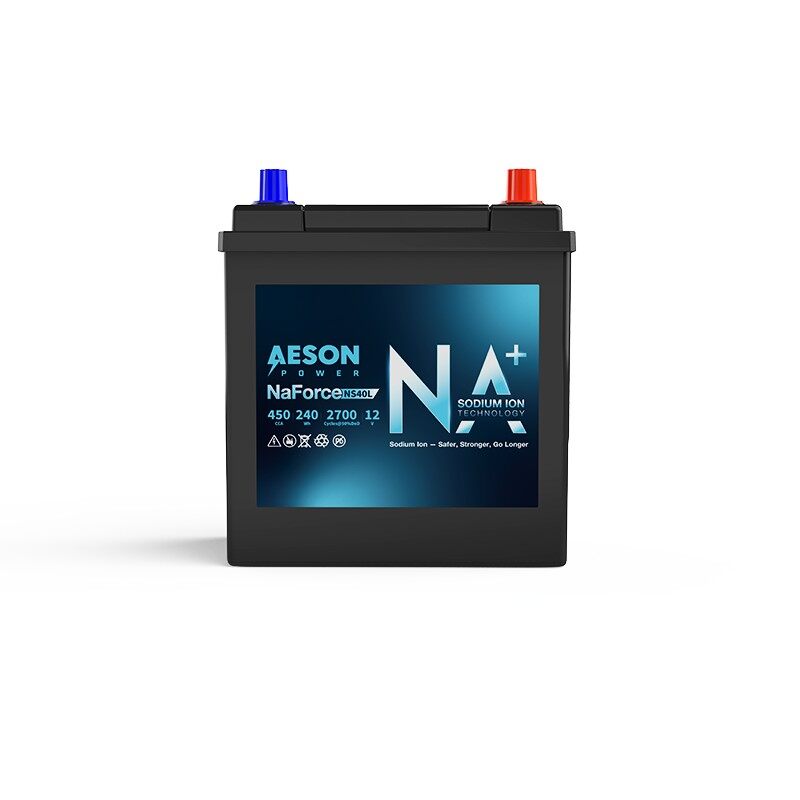
Lead-acid remains difficult to displace where low upfront cost dominates the purchase decision. Our own automotive information notes that sodium-ion starting products can carry a higher initial purchase cost than conventional lead-acid batteries, so the comparison cannot be based on purchase price alone.
Other factors can change the calculation, including weight, repeated cycling, charging behavior, replacement frequency, labor, downtime, climate, and vehicle use. Their financial importance varies by application, so assigning one universal savings figure would create a misleading expectation.
This is also why a sodium-ion battery factory has to support more than production volume. Product matching, technical documentation, quality control, and regional portfolio planning influence whether the technology can move from individual installations to repeatable commercial adoption.
The Market Will Likely Change by Segment
At Aeson Power, we work across sodium-ion, lead-acid, and lithium-ion technologies rather than assume one chemistry is appropriate everywhere. Our sodium-ion portfolio covers automotive starting, start-stop, commercial starting, racing, EV auxiliary, UPS, energy storage, and other applications.
The practical answer is therefore conditional. Alternatives to lead-acid batteries are commercially credible in selected applications today, and sodium-ion manufacturing is entering a larger industrial phase. Universal replacement still depends on supply-chain growth, standards, local economics, service networks, and verified application fit.
Aeson Power brings its Australian battery technology operations together with a strategic partnership with Xupai Group. Through our sodium-ion battery factory network, we provide factory-direct battery supply together with product matching, technical documentation, and application-focused support for international markets.


