






Choosing a replacement battery should begin with the car, not the catalogue. The existing battery, the owner’s manual, and the battery tray can reveal the system voltage, physical size, terminal position, and starting requirements that a replacement must satisfy.
A sodium-ion 12V car battery still has to work as part of the vehicle’s electrical system. Chemistry may influence performance characteristics, but correct fit, sufficient starting power, charging compatibility, and the vehicle’s duty cycle determine whether a battery is suitable in everyday use.
Start With the Vehicle Requirements
The first check is physical compatibility. A battery that is too long, too tall, or fitted with terminals on the wrong side can create installation problems even when its nominal voltage is correct. The hold-down system also needs to secure the battery properly without interfering with nearby components.
Terminal layout deserves the same attention as case size. The positive and negative posts must match the vehicle’s cable arrangement, and the cables should reach the terminals without being stretched or sharply bent. The existing battery code and the vehicle documentation are usually more reliable references than appearance alone.
Voltage is only one part of the match. The replacement also needs to suit the vehicle’s charging system and electrical loads. Buyers should therefore record the original battery type and basic fitment information before comparing alternative technologies or brands. This simple check prevents a technically impressive battery from becoming an impractical replacement.
Match the Battery to the Vehicle Duty
A conventional vehicle and a start-stop vehicle do not use the battery in the same way. A conventional starter battery is primarily expected to provide the high current needed for engine cranking and then recover while the engine is running.
Start-stop systems place a different pattern of demand on the battery because the engine may shut down and restart repeatedly during a journey. Electrical accessories can also remain active while the engine is stopped. A replacement should therefore be selected for the vehicle’s actual operating system rather than simply because it fits the tray.
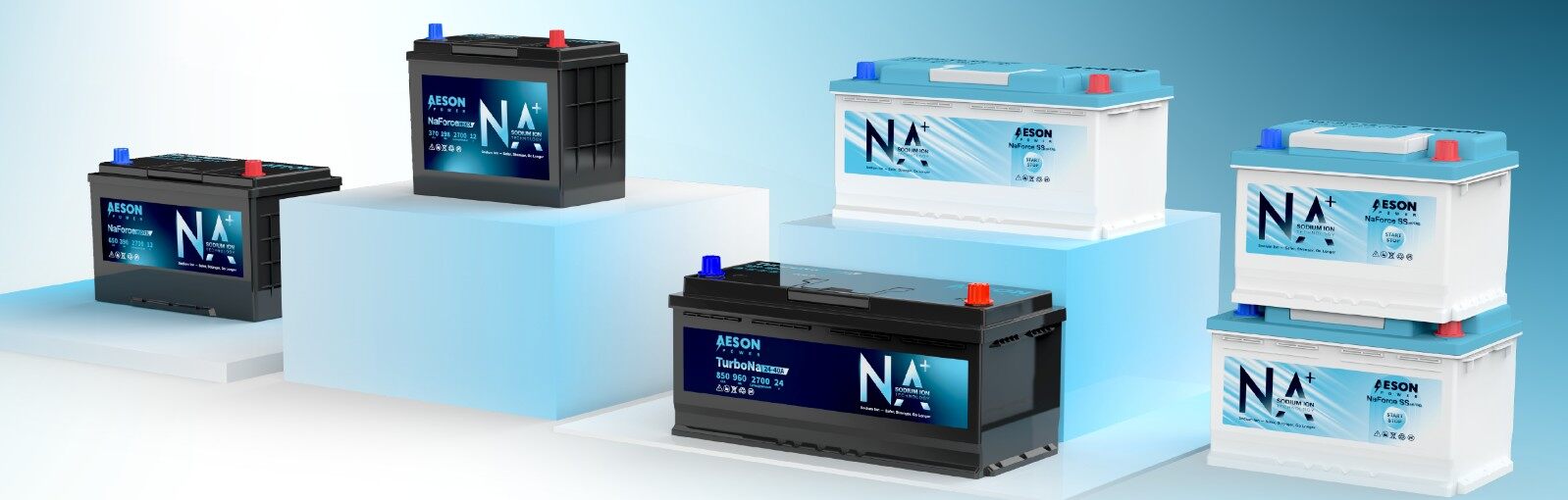
Aeson Power addresses these applications through separate NaForce starting and NaForce SS start-stop product families. The ranges cover multiple common automotive case formats, allowing selection to begin with the vehicle’s original fitment and duty instead of forcing one battery design across different applications.
Use CCA as a Requirement Not a Competition
Cold cranking amps (CCA) describe a battery’s ability to supply starting current under defined cold conditions. For a replacement battery, the useful question is whether the available CCA meets the engine and vehicle requirements, not whether one battery has the highest figure in a catalogue.
Engine size, climate, and the vehicle’s electrical design can all affect starting demand. Choosing substantially more starting output does not solve a poor physical fit, an incompatible charging system, or an incorrect terminal layout. Battery selection works best when these requirements are considered together, with the vehicle manufacturer’s minimum starting requirement used as the reference point.
This is especially important when comparing companies making sodium-ion batteries. A broad claim about high starting power says little about vehicle compatibility unless the supplier can also provide clear fitment information, application guidance, and appropriate options for the target market.
Check Charging Compatibility Before Installation
The alternator or charging system determines how the battery is replenished after starting. A battery may fit physically and provide sufficient cranking current but still be unsuitable if the vehicle charges it outside the conditions intended for that battery.
Modern vehicles can also use different charging strategies depending on operating conditions. Start-stop systems add another layer because repeated engine restarts and accessory loads change how energy moves through the low-voltage system. The original battery technology and the vehicle’s charging behaviour should therefore be checked before replacement.
For Aeson Power’s 12V automotive sodium-ion products, charging requirements vary by product family and should be matched to the relevant battery and vehicle. This is one area where model-specific technical information is useful: it confirms compatibility without turning the selection process into a comparison of isolated catalogue numbers.
Think Beyond a Single Vehicle
For an individual driver, the selection process ends when the battery fits the car and meets its electrical requirements. Distributors and fleet buyers face a wider question: which case formats, terminal layouts, and starting requirements occur most often across the vehicles they actually serve?
Local vehicle mix matters because demand can differ by country, fleet type, climate, and the age of the vehicles in service. Stocking many battery variants has little value if they do not correspond to common applications. A smaller, well-matched range may be more practical than a large catalogue with limited local relevance, while also simplifying sales guidance and inventory planning.
The same principle helps buyers evaluate companies making sodium-ion batteries. Product coverage should be supported by technical documentation, consistent specifications, application matching, and the ability to discuss special requirements when standard configurations do not suit a project.
Choose the Battery as Part of the Vehicle System
The right sodium-ion 12V car battery is not simply the lightest model or the one with the largest CCA figure. Selection should start with the vehicle and narrow the options through duty cycle, case dimensions, terminal layout, starting requirements, and charging compatibility.
Aeson Power develops sodium-ion automotive starting and start-stop solutions and works in strategic partnership with Xupai Group. For vehicle, fleet, or distribution projects, contact our team with the existing battery information, vehicle application, fitment requirements, and operating conditions to discuss suitable options.


