






A fleet battery decision should begin with operating data, not a catalogue. Engine size, electrical architecture, route pattern, ambient temperature, idle time, accessory load, and maintenance practice all change what the battery must do. When we discuss a diesel truck battery with a fleet buyer, our first task is to understand the vehicles and duty cycle before discussing a model.
What Does the Truck Actually Require
Fleet buyers should ask the supplier to confirm system voltage, required cold-cranking amps (CCA), case dimensions, terminal arrangement, and charging compatibility against the target vehicle. These are basic questions, but they prevent a common procurement mistake: selecting a battery because one specification looks strong while another does not fit the truck.
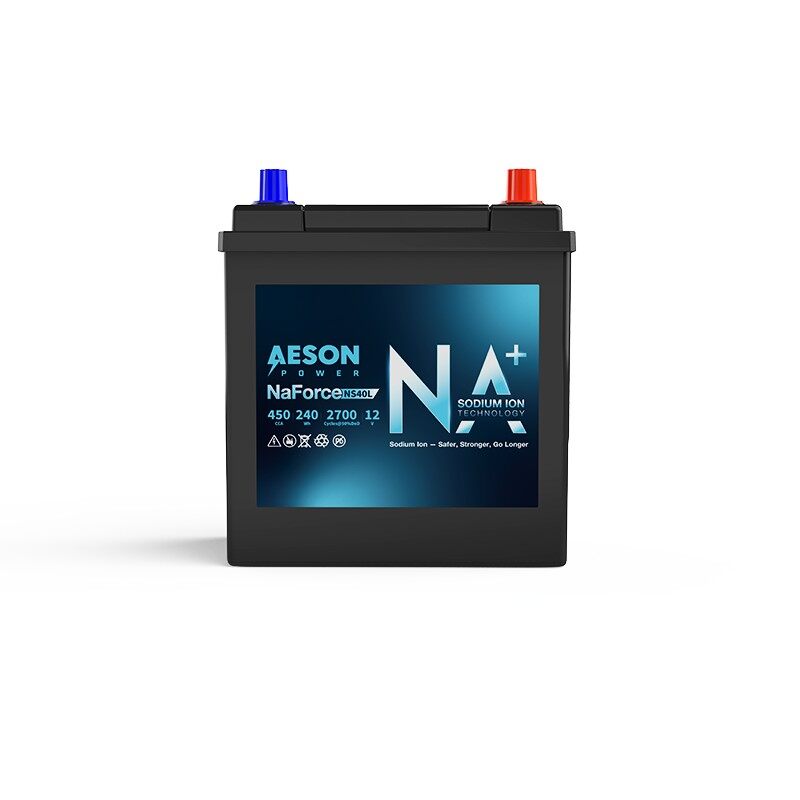
Our TurboNa commercial sodium-ion starting batteries are designed for 24V applications in commercial vehicles and diesel-powered equipment. Buyers should confirm that the selected model meets the vehicle's starting requirements, electrical architecture, installation constraints, and charging compatibility. Model selection should be based on the intended application rather than assuming all variants are interchangeable.
Can a Diesel Truck Battery Replace the Existing Layout
Many heavy-duty vehicles use two 12 V lead-acid batteries connected in series to create a 24 V system. Our TurboNa design integrates the required 24 V architecture in one pack. A fleet buyer should still ask whether the vehicle electrical system, mounting space, terminal arrangement, cables, and charging system are compatible before changing the existing layout.
This is where a diesel truck battery purchase becomes an integration decision rather than a simple replacement order. Reducing the number of battery units and external series connections can simplify the installation, but the suitability of that arrangement has to be checked for the specific vehicle.
What Happens During the Fleet's Hardest Start
Average conditions rarely expose a starting system's weakness. Buyers should describe the lowest expected temperature, longest parking period, engine displacement, oil viscosity, and repeated restart pattern. A battery that starts a warm engine after a short stop may face a different demand after an overnight cold soak.
Our commercial starting products are positioned for buses, coaches, light trucks, diesel engines, construction machinery, generator sets, and air compressors. Because these applications do not share one duty cycle, we treat the stated CCA as one input rather than a complete prediction of field performance.
What Evidence Supports Reliability Claims
A fleet buyer should ask what was actually tested, on which model, under what conditions, and with what acceptance criteria. Test descriptions are more useful than broad claims such as “heavy duty” or “long life.”
Our published TurboNa information states 2,700 cycles at 50% depth of discharge under specified test conditions. For procurement, the useful follow-up is not simply whether a cycle figure exists, but what test conditions produced it and whether those conditions correspond to the quoted model and expected fleet duty.
The same discipline should apply to vibration, temperature, and starting-performance claims. A procurement team should ask whether a number comes from the exact quoted product, a related product family, or broader chemistry data. That distinction helps prevent a specification from being applied outside the conditions it actually describes.
How Will the Battery Be Charged in Service
Charging questions should be resolved before a fleet order is released. Alternator behavior, voltage regulation, long-idle operation, auxiliary loads, external chargers, and maintenance equipment can affect whether a replacement battery operates within its intended window.
Buyers should ask for the approved charging profile for the exact commercial product. A 24 V fleet system should not be evaluated by simply doubling a 12 V charging instruction unless the supplier's documentation explicitly supports that approach. We avoid filling documentation gaps with assumptions because charging compatibility is part of the vehicle system.
What Support Exists After the Purchase Order
Fleet procurement extends beyond the battery itself. Technical teams may need installation guidance, product drawings, model data, troubleshooting information, storage instructions, or help investigating an unexpected field result.
At Aeson Power, we provide factory-direct battery supply for international markets. For commercial starting projects, customization can be evaluated for voltage, energy capacity, CCA, case dimensions, terminal configuration, protection functions, branding, packaging, and technical documentation, subject to technical feasibility, certification requirements, and order volume.
Can the Supplier Support a Mixed Fleet
A mixed fleet may include trucks, buses, generators, construction equipment, and air compressors. The buyer should ask whether one battery family genuinely covers those applications or whether separate specifications are required.
Our TurboNa range currently includes the 24-20A and 24-40A. That is a defined two-model range, not a claim that two batteries fit every commercial vehicle. For vehicles outside those specifications, the next step is an application review rather than forcing a standard model into an unsuitable installation.
What Should Be Written Into the RFQ
A useful request for quotation (RFQ) should specify the vehicle or equipment type, engine details, system voltage, minimum cold-cranking amps (CCA), available battery dimensions, terminal requirements, charging-system details, operating temperature range, annual mileage or operating hours, restart frequency, and expected order quantity. These details help suppliers assess compatibility and provide quotations against consistent technical requirements.
At Aeson Power, we supply sodium-ion, lithium-ion, and lead-acid battery solutions in strategic partnership with Xupai Group, including commercial sodium-ion batteries for 24V starting applications. Share your fleet profile, vehicle requirements, operating environment, and existing battery configuration with our team to begin a product-matching and compatibility review.


