






A generator room can become a harsher battery environment after the engine starts than it appeared during standby. Engine surfaces, exhaust components, alternators, chargers, and restricted airflow all add heat. At Aeson Power, when we design high temperature battery packs for generator applications, we look beyond a temperature figure. Chemistry, enclosure design, battery location, charging conditions, ventilation, and expected service life have to be considered.
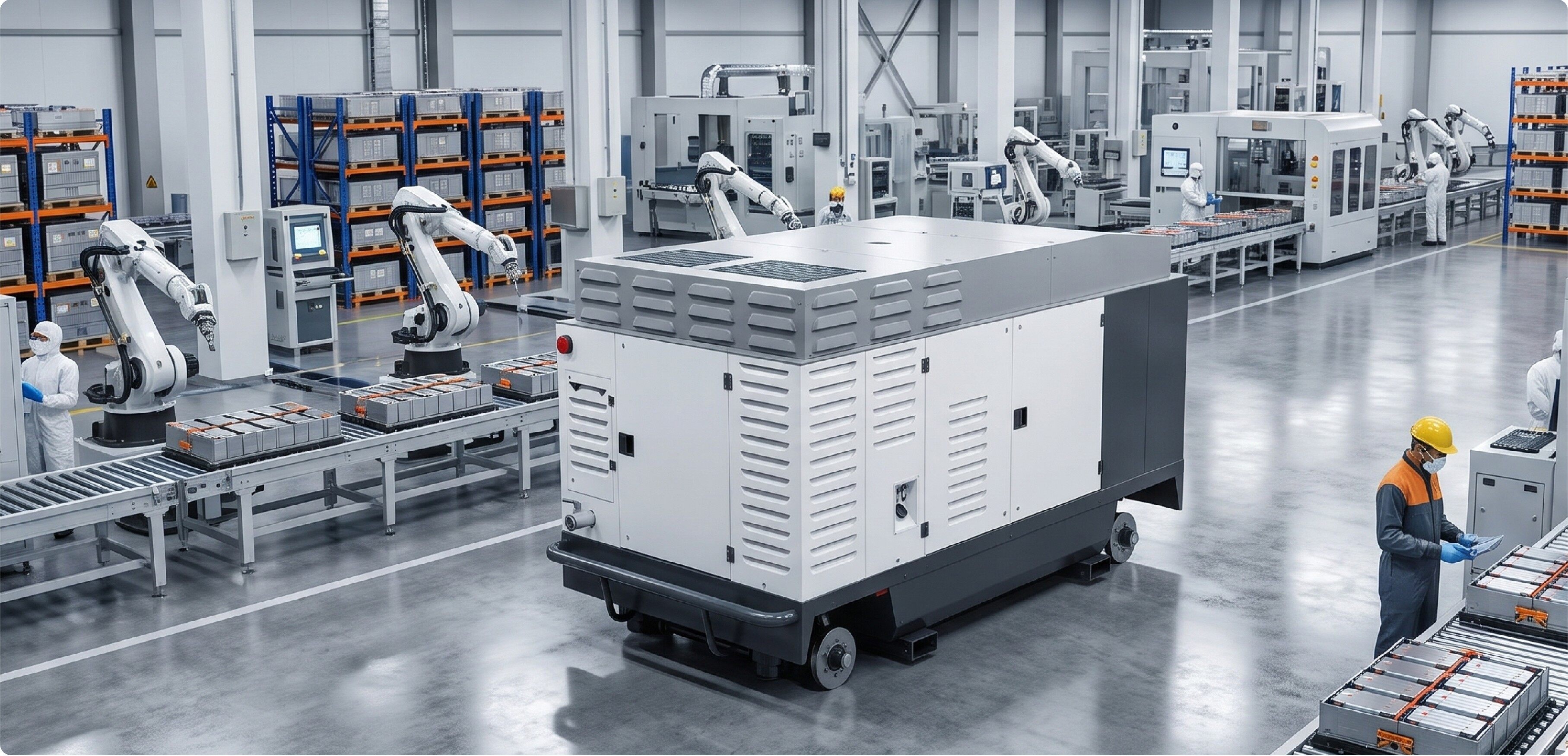
The Room Temperature Is Part of the Battery Specification
Generator rooms need ventilation not only to provide combustion air but also to remove heat released by the generator set and other equipment. Poor ventilation can allow heat to accumulate around the generator, potentially affecting its performance and other temperature-sensitive equipment in the room.
That matters because the battery may experience a moderate standby temperature and a much hotter condition while the generator runs at load. A useful site assessment records battery location, nearby heat sources, airflow, and the temperature reached after the generator has stabilized.
A wide operating range does not mean identical life or electrical behavior at every temperature. Temperature is an operating condition, not just a pass-or-fail label.
High Temperature Battery Packs Start With Chemistry
Heat influences electrochemical reaction rates, internal resistance, side reactions, and aging. A 2025 review of sodium-ion batteries under extreme temperatures reports that high temperatures can accelerate degradation and increase safety challenges. That is why material stability and the approved operating window both matter when a battery is placed near a generator.
Generator rooms need ventilation not only to provide combustion air but also to remove heat released by the generator set and other equipment. Poor ventilation can allow heat to accumulate around the generator, potentially affecting its performance and other temperature-sensitive equipment in the room. We use this published range as an engineering boundary. We do not treat 80°C operation as evidence that continuous exposure near 80°C has no effect on service life.
The same caution applies when comparing battery chemistries. Lead-acid batteries have a long record in standby generator systems, but prolonged exposure to elevated temperatures can accelerate aging and shorten service life. Temperature effects should be evaluated according to the characteristics and approved operating conditions of each battery chemistry rather than assuming the same aging relationship applies to sodium-ion batteries.
The Enclosure Has to Manage More Than Dust
An enclosure protects cells, connections, BMS hardware, and conductors from the surrounding environment, but sealing and thermal management can pull in opposite directions. Greater sealing can help against dust or moisture, while an enclosed volume can also retain heat if the design does not provide an adequate thermal path.
For customized projects, Aeson Power supports structural and electrical integration, BMS co-customization, and thermal-control settings. This allows the enclosure, battery dimensions, interfaces, and protection strategy to be developed around the installation rather than forcing a generator room to accept a standard case.
Placement remains important even with a customized enclosure. A battery positioned beside exhaust components or in recirculating radiator air can see a very different temperature from one located in a cooler service zone. Cummins specifically advises accounting for heat from other sources when designing generator-room ventilation.
Charging Conditions Can Become a Heat Multiplier
Generator starting batteries may spend most of their lives on standby charge and brief periods delivering cranking current. A charger that holds the battery outside its approved voltage window can add electrical stress to an already warm environment.
Charging conditions and ambient temperature should be considered together in high-temperature installations. Charging voltage and current, room temperature, and ventilation can all influence battery operating conditions and service life. Their acceptable limits depend on the battery chemistry and system design, so charging and thermal conditions should be assessed as part of the same installation rather than as separate maintenance topics.
For our custom sodium-ion systems, BMS co-customization can include protection settings and thermal controls. A high-temperature installation therefore needs clear limits for charge voltage, current, temperature, and fault response. These values should come from the battery design and charger specification, not from assumptions based on another chemistry.
Service Life Should Be Managed With Measurements
A generator battery can look normal while its electrical condition changes. Temperature history, terminal condition, charging behavior, internal resistance where applicable, and starting performance can all provide useful evidence during service.
For high temperature battery packs, maintenance planning should also include the environment around the battery. Ventilation paths can become obstructed, generator-room airflow can change after equipment modifications, and a new heat source can alter the local temperature without any change to the battery itself.
We therefore separate "maintenance-free battery" from "maintenance-free installation." Our custom sodium-ion generator solutions are described as zero-maintenance at the battery level, but terminals, cables, mounting, chargers, ventilation, and surrounding equipment still need appropriate inspection. The battery chemistry does not remove those system responsibilities.
Design Around the Generator Room That Actually Exists
Battery selection for a generator room should begin with actual site conditions, including starting requirements, battery location, measured temperature, ventilation, charging arrangements, available space, standby periods, and environmental exposure. These factors help determine whether a standard starting battery or a customized solution is more appropriate, especially where high temperatures or installation constraints affect battery operation.
Aeson Power develops sodium-ion solutions for generator starting and customized applications, combining battery development with structural integration, BMS customization, and application matching. For a high-temperature generator installation, contact our team with the generator requirements, measured temperatures, charging conditions, available space, and operating environment to discuss a battery solution designed around the actual site.


