










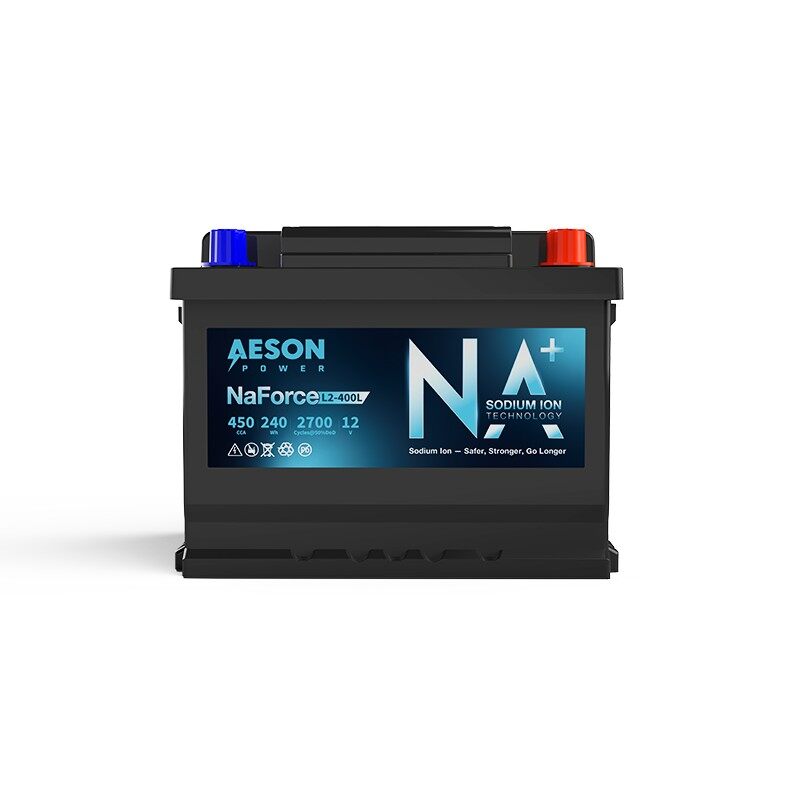
A diesel engine can demand substantial electrical power before it begins running, particularly after sitting overnight in cold weather or operating under demanding conditions. Its high compression ratio and robust starter requirements make battery selection an important part of starting-system reliability.
A battery with high CCA can provide the strong burst of current needed during cranking, but understanding what this rating actually measures is essential before comparing battery specifications. At Aeson Power, we focus on battery technologies for automotive and commercial applications, where starting performance must match real operating demands.
Why Diesel Engines Need Strong Cranking Current
Diesel engines ignite fuel through compression rather than spark plugs. During startup, the starter motor must rotate the engine fast enough to create the heat and compression conditions required for ignition. Larger displacement, high compression and internal mechanical resistance can increase the electrical demand placed on the starting system.
Cold weather makes this task more difficult. Engine oil becomes more viscous as temperatures fall, increasing resistance to crankshaft movement. Battery electrochemical reactions also slow down in low temperatures, potentially reducing the current available for starting. These combined effects explain why diesel trucks operating in winter conditions often require substantial cranking capability.
Cold Cranking Amps, commonly abbreviated as CCA, measures the current a battery can deliver at a specified low temperature for a defined period while maintaining a minimum voltage. The testing temperature and procedure depend on the applicable standard, so ratings should be compared using the same testing method. A higher CCA value indicates greater standardized cold-starting output, but it does not independently describe battery capacity or service life.
How High CCA Supports Heavy-Duty Starting Systems
During engine cranking, the battery supplies a large current for a relatively short period. If the available current is insufficient, the starter may turn slowly, making ignition more difficult. Adequate cranking output helps the starter reach the speed required by the engine's design, particularly under challenging temperature conditions.
However, CCA should not be treated as the only measure of battery suitability. Reserve capacity and energy capacity describe other aspects of electrical performance, while voltage determines compatibility with the vehicle's electrical architecture. A truck equipped with a 24V starting system, for example, requires a battery arrangement designed for that voltage; a high CCA rating on an incompatible 12V unit cannot solve the mismatch.
Electrical connections also influence the current reaching the starter. Corroded terminals, loose cable connections, undersized wiring and excessive circuit resistance can cause voltage drops even if the battery itself has a strong rating. Regularly checking the starter motor, grounding points and charging system is just as important as reviewing the battery label.
Charging Voltage and Battery Condition Matter Too
Starting performance depends on more than the battery's condition at the moment the ignition is switched on. A suitable charging system must restore the energy consumed during engine startup and support other electrical loads. Incorrect charging voltage can affect battery performance and service life, making compatibility between the battery and alternator particularly important.
For the relevant 12V charging specification, the stated charging voltage range is 14.4--14.8V, with 14.6V recommended as the maximum charging voltage. After a full charge and approximately 30 minutes of rest, the open-circuit voltage is usually around 13--14.5V. These figures should be interpreted according to the battery's chemistry and manufacturer's instructions; charging limits are not universal across all battery types.
Our 24--40A commercial starting battery is rated at 24V, 850A CCA and 960Wh. This combination illustrates the distinction between system voltage, cranking output and stored energy in a heavy-duty application. Its specified high-temperature operating capability reaches 80℃, an important consideration in commercial environments exposed to substantial heat. Vehicle operators should still verify the required voltage configuration, charging profile and physical installation specifications before selecting a replacement.
Selecting a Battery for Real Operating Conditions
The right starting battery depends on the engine, vehicle voltage, climate and daily workload. A long-haul truck operating in cold regions may place particular emphasis on cold-starting capability, while construction machinery working in hot environments may face additional thermal and vibration demands. Fleet operators should consider both the conditions at startup and the electrical loads experienced throughout the working day.
Battery chemistry introduces another consideration. Different chemistries have distinct voltage characteristics, charging requirements and temperature responses. A battery with high CCA must be evaluated as part of a compatible system, rather than judged by its current rating alone. Installation dimensions, terminal polarity, battery management requirements and alternator compatibility all deserve attention.
Manufacturing consistency also affects the reliability of starting batteries. Electrode quality, cell assembly, internal connections and production testing can influence resistance and current delivery. For commercial applications, evaluation should include finished-battery testing under relevant temperature, vibration and discharge conditions, rather than relying exclusively on individual cell specifications.
Conclusion
Reliable diesel starting depends on the relationship between engine requirements, available cranking current and the condition of the entire electrical system. A battery with high CCA can provide valuable starting capability, especially in cold conditions, but the rating must be considered alongside voltage, energy capacity, charging compatibility and installation requirements. Understanding these factors helps fleet operators make more informed battery decisions and reduce avoidable starting problems.
At Aeson Power, we develop sodium-ion battery solutions for automotive starting, commercial vehicles and energy applications, combining battery engineering with manufacturing experience across different operating requirements. Our work focuses on application-specific specifications, production consistency and practical performance considerations. Visit our website to learn more about our commercial starting battery solutions and discuss the requirements of your equipment.