










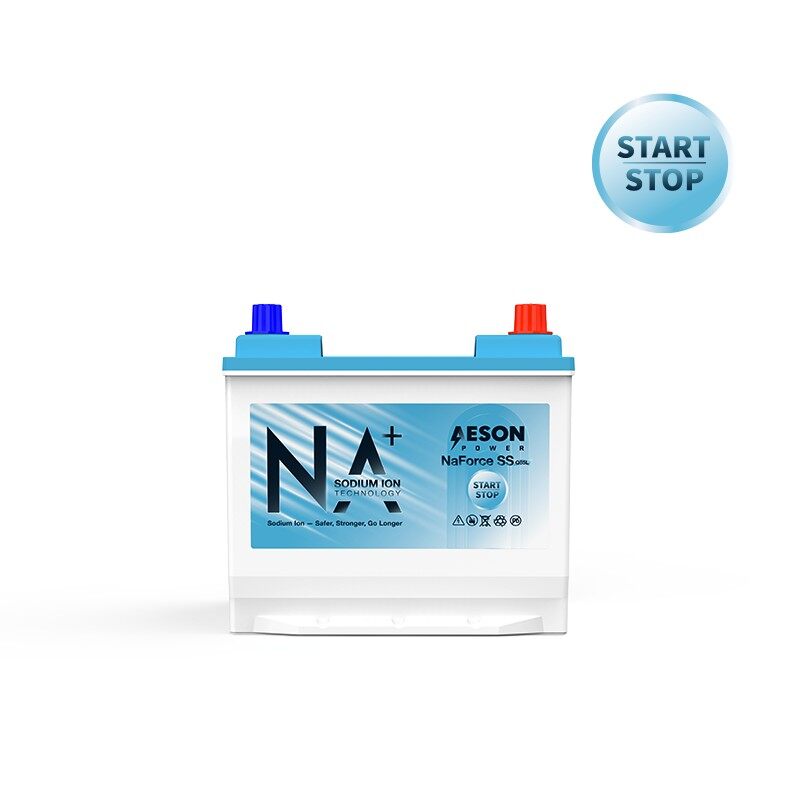
Automotive batteries face demands that extend far beyond simply supplying electricity to start an engine. Frequent restarts, short journeys, electrical accessories, temperature fluctuations, and repeated charging cycles all influence how well a battery performs over time. As interest in sodium ion battery for cars grows, understanding technical specifications becomes increasingly important for vehicle manufacturers, distributors, and automotive aftermarket professionals.
Parameters such as cold cranking amps, nominal voltage, energy capacity, weight, and cycle life reveal different aspects of battery capability. At Aeson Power, we focus on developing sodium-ion solutions that address practical automotive requirements through material innovation and application-oriented engineering.
Understanding the Core Specifications of Automotive Batteries
Voltage is one of the first parameters to examine when evaluating an automotive battery. Most conventional passenger vehicles use a 12V electrical system, meaning the battery must operate within the voltage requirements of the vehicle's starter and electrical components. However, nominal voltage alone does not indicate how much starting power or stored energy a battery can provide.
Cold cranking amps (CCA) describe a battery's ability to deliver high current under standardized low-temperature testing conditions. This specification is particularly relevant to engine starting because the starter motor requires substantial electrical power to turn the engine. A higher CCA rating can provide greater starting-current capability, although actual performance also depends on engine requirements, temperature, battery condition, and electrical connections.
Energy capacity, commonly expressed in watt-hours (Wh), represents the amount of electrical energy available from a battery under specified conditions. It differs from CCA because energy capacity concerns sustained electrical supply rather than short-duration starting power. For automotive applications, both measurements matter: one relates to starting performance, while the other helps describe the battery's ability to support electrical loads.
Why Start-Stop Systems Require Different Battery Characteristics
Modern vehicles increasingly use automatic start-stop systems to reduce unnecessary engine idling. During traffic stops, the engine temporarily switches off and restarts when driving resumes. Although this function can reduce fuel consumption under suitable conditions, it places additional demands on the battery compared with conventional starting systems.
Frequent engine restarts increase the number of charge-discharge events experienced during everyday driving. A battery designed for ordinary starting duties may not provide the same cycling durability as one developed specifically for start-stop operation. Cycle life is consequently an important specification, indicating how many defined charge-discharge cycles a battery can undergo under particular testing conditions.
Charging acceptance also deserves attention. After each engine restart, the vehicle's charging system must replenish the energy used during starting. Batteries with suitable charge acceptance can recover energy more effectively during available driving periods. Actual results depend on battery chemistry, temperature, charging voltage, current limits, and the vehicle's energy management strategy.
Weight represents another consideration, particularly for automotive manufacturers seeking to reduce vehicle mass. Battery construction and electrode materials influence overall weight, but a lighter battery must still satisfy the vehicle's electrical and mechanical requirements. Dimensions and terminal arrangements are equally important because installation space varies between vehicle platforms.
How to Evaluate Sodium-Ion Battery Performance in Vehicles
Sodium-ion chemistry introduces different material characteristics compared with conventional lead-acid batteries. Sodium is widely available, and certain sodium-ion cathode materials offer favorable structural stability and thermal characteristics. Polyanion-based materials, for example, use strongly bonded anionic groups to support framework integrity during repeated electrochemical reactions.
Temperature adaptability is another relevant evaluation factor. Automotive batteries may encounter freezing mornings, hot engine compartments, and substantial seasonal temperature changes. Low temperatures can increase internal resistance and slow electrochemical reactions, while prolonged heat exposure may accelerate unwanted side reactions. Battery chemistry, electrolyte formulation, cell construction, and thermal management collectively influence performance across these conditions.
Vehicle compatibility must also be considered before installation. The battery's voltage, CCA, physical dimensions, terminal configuration, charging requirements, and communication characteristics should match the vehicle's specifications. Sodium-ion batteries are not automatically interchangeable with existing lead-acid products simply because both operate at 12V. Compatibility testing and manufacturer guidance remain essential.
For buyers comparing companies making sodium ion batteries, examining actual model specifications is more useful than relying exclusively on general statements about battery chemistry. A manufacturer's technical documentation should clarify rated voltage, starting current, energy capacity, cycle life, operating temperature, and recommended charging conditions. Testing methods should also be considered because figures obtained under different conditions may not be directly comparable.
Putting Automotive Battery Specifications Into Practice
A useful way to assess these parameters is to consider a specific start-stop application. For example, our Aeson Power Q85L sodium-ion start-stop battery is rated at 12V, with a CCA of 650A and an energy capacity of 396Wh. It weighs 5.5kg, supports 120,000 start-stop cycles, and measures 232 × 173 × 200(220) mm. These figures provide a practical reference for evaluating starting capability, energy storage, installation space, and cycling requirements in compatible automotive applications.
Beyond individual specifications, battery performance should be assessed as a combination of interacting characteristics. A high CCA rating does not necessarily indicate greater energy capacity, just as an impressive cycle-life figure does not independently establish suitability for every vehicle. The intended duty cycle, charging system, climate, and electrical load all influence the final application decision.
Conclusion
Automotive battery selection requires more than comparing a few numbers on a specification sheet. Voltage establishes electrical compatibility, CCA indicates starting-current capability, energy capacity describes available electrical storage, and cycle life helps assess suitability for repeated start-stop operation. Physical dimensions and weight complete the picture by addressing practical installation requirements.
At Aeson Power, we develop sodium-ion battery solutions supported by NFPP polyanion technology, focusing on structural stability, temperature adaptability, high-rate discharge, and automotive application requirements. Our manufacturing capabilities include seven production centers, more than 90 production lines, and an annual production capacity of 30 GWh. We welcome automotive distributors, OEMs, and industry partners to explore our battery portfolio and technical capabilities. Explore Aeson Power's sodium-ion solutions to discover new possibilities for next-generation automotive power systems.