






When thinking about automotive power, the main battery usually comes to mind first. But today's vehicles rely on many interconnected electrical systems that need stable support beyond the primary power source. A smaller battery works quietly in the background, helping maintain essential functions that drivers depend on every day.
As vehicles become more intelligent, connected, and electrified, the need for reliable low-voltage power keeps growing. That's where the car battery auxiliary comes in—and why its role deserves closer attention.
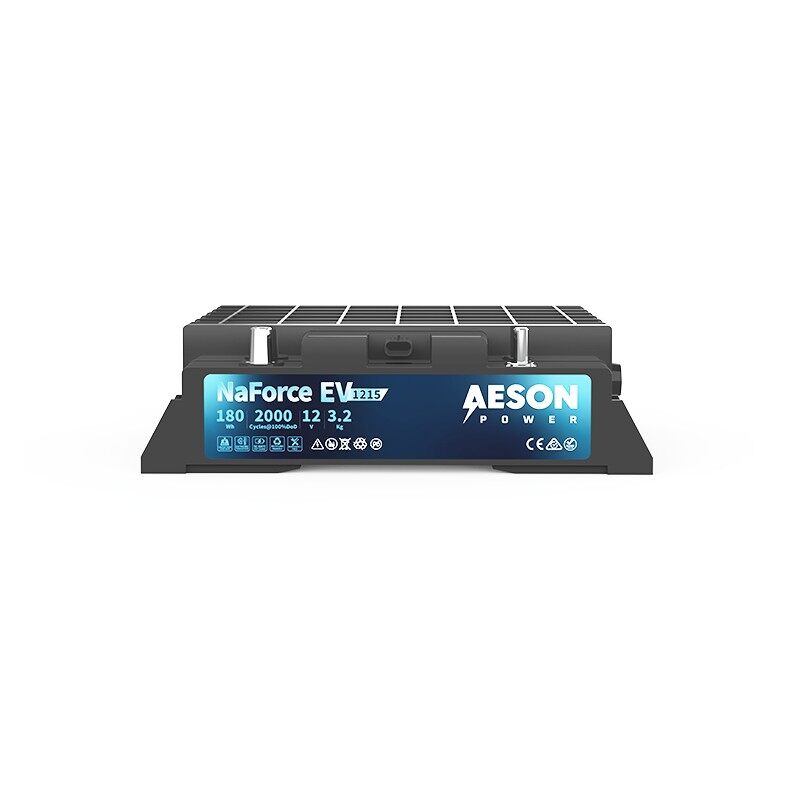
What a Car Battery Auxiliary Actually Does
In an electric vehicle, the car battery auxiliary (typically 12V) powers everything except the drivetrain. It runs the control units, safety systems, sensors, lighting, displays, locks, and communication modules. When you press unlock on a cold morning, it's the car battery auxiliary that responds, not the high-voltage traction pack.
But there's a more critical job: the car battery auxiliary controls the contactors that connect or disconnect the main traction battery. Even if the high-voltage battery is fully charged, the vehicle won't start if the car battery auxiliary is dead. It's the gatekeeper between you and the drive.
In hybrids and EVs, the car battery auxiliary is charged differently than in conventional cars. Instead of an alternator, a DC/DC converter steps down voltage from the high-voltage traction battery to recharge the low-voltage system. That converter is a key component you won't find in a gas-powered vehicle.
Why Modern Vehicles Need Dedicated Low-Voltage Support
The main reason for separating high-voltage and low-voltage systems is safety. If the traction battery powered the vehicle's electronics directly, it would overwhelm them. The 12V system also ensures that critical safety functions—hazards, door releases, emergency calls—remain operational even if the high-voltage system is shut down after a crash or for service.
Consider this: roadside breakdown statistics show that 43% of all callouts are due to starter battery failure—and that includes EVs. The car battery auxiliary may be small, but when it fails, the vehicle is just as stranded as a gas car with a dead battery. Common warning signs include unstable electronic functions, slow system responses, and dashboard warnings.
For vehicle owners, recognizing these signs early can prevent unexpected breakdowns. If the infotainment system resets intermittently, the keyless entry becomes unreliable, or the vehicle displays low-voltage warnings, these are often indications that the car battery auxiliary is nearing the end of its service life.
Unlike the main traction battery, which provides range estimates and state-of-health indicators, car battery auxiliary units typically lack such monitoring systems, making proactive replacement more challenging without regular testing.
The Cold-Weather Problem with Conventional Auxiliary Batteries
Most EVs still use lead-acid or AGM car battery auxiliary units, the same technology found in gas-powered vehicles. But these chemistries struggle in extreme cold. Below 0°C, they lose cranking power and can freeze solid when discharged. At -20°C, conventional lithium batteries can experience a drop of more than 30% in output power and capacity, according to Aeson Power's product information.
That's a real problem for EV owners in cold climates. When the car battery auxiliary loses temperature, the vehicle may fail to wake up—no control systems, no contactors, no start. This is particularly concerning in regions where winter temperatures regularly drop below -20°C, as conventional batteries may leave drivers stranded even when the main traction battery has sufficient charge.
The root cause lies in battery chemistry. In cold conditions, electrolyte viscosity increases and internal resistance rises, reducing the battery's ability to deliver current. For car battery auxiliary units that are already operating in thermally challenging environments—often located in less protected areas of the vehicle than the main pack—this effect is amplified.
Sodium-Ion: A Different Approach to Auxiliary Power
Sodium-ion batteries offer a way around these limitations. Unlike conventional lithium batteries, which suffer from increased electrolyte viscosity and surging impedance in the cold, sodium-ion batteries have lower solvation energy and interfacial impedance. At -20°C, they can still release over 90% of their capacity while maintaining strong discharge and charge acceptance.
In terms of safety, the difference is also clear. When conventional lithium batteries experience nail penetration or internal short circuits, they're prone to thermal runaway and fire risk. Sodium-ion batteries have a higher thermal runaway onset temperature, and the hard carbon anode naturally suppresses dendrite growth. Extreme abuse tests show "no smoke, no fire, no explosion" performance. This intrinsic safety advantage makes sodium-ion particularly suitable for car battery auxiliary applications, where the battery may be installed in areas with limited ventilation or crash protection.
What This Means for Vehicle Design
The car battery auxiliary slot doesn't need high energy density—typical packs are only 0.5 to 2 kWh, and you're not fighting for range. What matters is reliability: cold cranking reserve, thermal stability, and how the battery handles a partially discharged, rarely-cycled duty profile. Sodium-ion fits that scorecard well.
For vehicle manufacturers, the shift to sodium-ion car battery auxiliary units represents more than a simple technology upgrade. It can reduce warranty claims related to low-voltage system failures, particularly in cold-climate markets where conventional batteries underperform. It also simplifies the vehicle's thermal management strategy, as sodium-ion's wide operating range reduces the need for active heating or cooling of the car battery auxiliary.
Designing Auxiliary Batteries for Real-World Use
At Aeson Power, we've built our 12V and 24V sodium-ion car battery auxiliary solutions around these real-world requirements. They operate from -40°C to 80°C, require no maintenance, and are designed to outlast the vehicle's service life. For EV manufacturers and fleet operators, that translates to fewer warranty claims and fewer unexpected service visits.
We work directly with vehicle OEMs to match the right battery to each model's low-voltage architecture. If the standard configuration doesn't fit, we adapt—terminal placement, case dimensions, BMS tuning, whatever the build requires. Because when the car battery auxiliary is the gatekeeper to the entire vehicle, it pays to get the details right.
Our batteries are designed with a maintenance-free sealed construction, eliminating the need for electrolyte checks or fluid top-ups. The polyanionic framework structure provides thermal stability even under the sustained heat of engine bay environments, and the integrated BMS offers overcharge, over-discharge, and over-temperature protection to ensure the battery remains within its safe operating envelope throughout its service life.
For inquiries regarding specific vehicle platforms or operating conditions, our technical team at Aeson Power is available to discuss your requirements.


