






A low-voltage battery can perform the same broad role across several electric-vehicle platforms while facing very different demands. Passenger cars prioritize compact packaging and network integration. Commercial vehicles may use 24 V architectures, carry heavier auxiliary loads, and spend longer periods in service. When we discuss a car battery auxiliary solution, we therefore start with the platform rather than assume one battery format can move unchanged from one vehicle class to another.
The Platform Sets the Electrical Baseline
An electric vehicle uses a high-voltage traction battery for propulsion, but its low-voltage system powers accessories and control electronics. The U.S. Department of Energy notes that a DC/DC converter steps traction-battery voltage down for vehicle accessories and recharges the auxiliary battery.
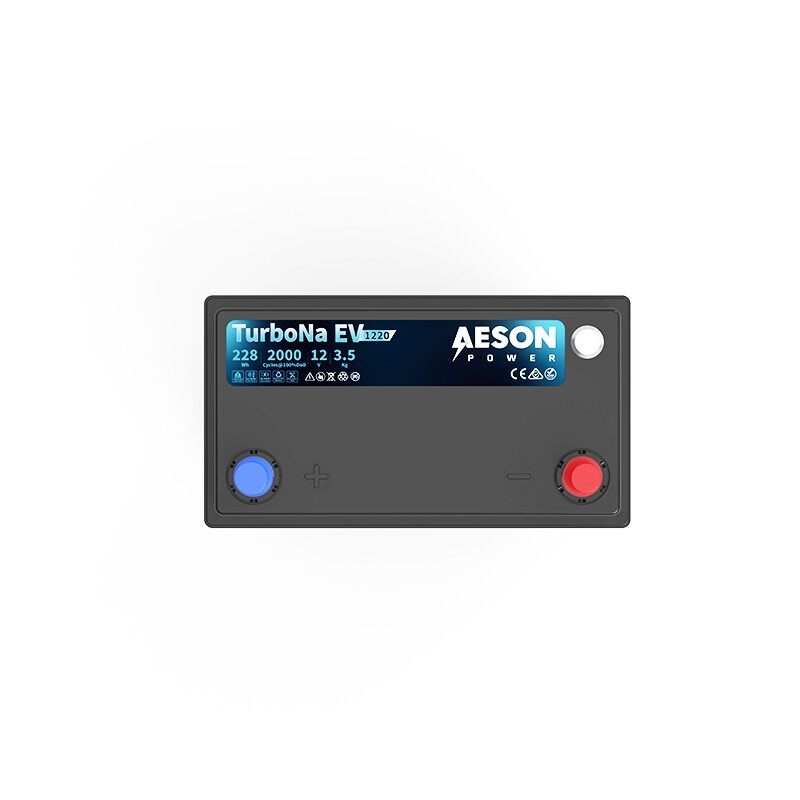
That arrangement does not create one universal auxiliary standard. Most electric passenger cars use 12 V low-voltage systems, while some electric commercial vehicles use 24 V systems. Our EV auxiliary range reflects that distinction: NaForce EV 1215 is a 12 V product for electric passenger cars, while our commercial EV offering includes 12 V 1220 and 24 V 2440 options.
Why the Car Battery Auxiliary Choice Changes by Platform
A passenger EV and an electric commercial vehicle can both need low-voltage power for control units, lighting, locks, safety equipment, communication systems, and vehicle wake-up. Their duty patterns, however, are not identical.
A passenger car may spend long periods parked and then experience short commuting cycles. A delivery vehicle or other commercial platform may operate for many hours, support greater auxiliary demand, and encounter repeated stops, rougher routes, or longer working days. That difference affects voltage selection, protection strategy, packaging, and how deeply the auxiliary system may be discharged.
We therefore avoid treating "12 V" or "24 V" as a complete product definition. Voltage is only the first architectural decision.
Packaging Can Decide Whether a Battery Is Suitable
Low-voltage batteries often have to fit into tightly defined spaces, particularly in passenger EVs where packaging is already crowded. Dimensions, mounting, terminal access, cable routing, and service access can determine whether a battery is practical before chemistry is even considered.
Our NaForce EV 1215 measures 265 × 180 × 75 mm, weighs 3.2 kg, and stores 180 Wh. It supports CAN and CAN FD communication. These are model-specific figures, not specifications for every Aeson Power auxiliary product.
For a sodium-ion battery manufacturer, publishing the exact dimensions and communication protocol matters because an apparently similar battery may still be incompatible with the vehicle's mechanical or electronic architecture.
Communication Requirements Can Separate One Platform From Another
Modern EV auxiliary batteries can be integrated more closely with the vehicle than traditional low-voltage batteries. The battery may need to report status, support diagnostics, or participate in protection and power-management logic.
Our NaForce EV platform incorporates a BMS with ASIL-B functional-safety capability and supports CAN and CAN FD communication. The TurboNa EV commercial platform uses a BMS that meets QM-level functional-safety requirements, monitors battery voltage and current, and provides low-state-of-charge protection.
Those are different published system descriptions. We do not treat them as interchangeable. The required communication protocol and safety architecture should come from the vehicle or OEM specification rather than from a generic assumption about EV batteries.
Commercial Vehicles Put More Emphasis on Operating Environment
Commercial vehicles may spend longer periods working outdoors and can face dust, moisture, uneven roads, or sustained auxiliary loads. A battery for that platform therefore needs to be assessed against the environment in which the vehicle actually operates.
TurboNa EV is developed as a sodium-ion auxiliary battery for electric commercial vehicles. It combines an IP68-rated enclosure with vibration-resistant construction and supports operation at temperatures up to 80°C. Its BMS provides voltage and current monitoring together with low-state-of-charge protection, helping the battery manage demanding auxiliary loads and extended periods of vehicle inactivity.
Charging Has to Match the Low Voltage Architecture
The auxiliary battery is normally recharged from the vehicle through the DC/DC converter rather than from the external traction-battery charging connector. That makes the vehicle's low-voltage charging strategy part of battery selection.
For our 12 V NaForce EV products, published charging guidance gives a 14.4 to 14.8 V range with 14.6 V as the recommended maximum charging voltage. A 24 V commercial platform cannot be evaluated simply by doubling a 12 V instruction unless the relevant product documentation explicitly states the correct values.
As a sodium-ion batteries manufacturer, we treat charging compatibility as a system question. The converter, battery limits, BMS logic, and vehicle control strategy need to agree.
Vehicle Platform Comes Before Chemistry Preference
A buyer may begin with sodium-ion chemistry, but the vehicle platform determines whether a battery is suitable. Passenger and commercial vehicles can differ in low-voltage architecture, packaging, standby loads, environmental exposure, communication, charging behavior, and protection requirements. OEM and fleet projects therefore need battery configurations that reflect the electrical and operating demands of the specific vehicle rather than chemistry preference alone.
At Aeson Power, we develop sodium-ion auxiliary solutions for electric passenger and commercial vehicles. As a sodium-ion battery manufacturer working in strategic partnership with Xupai Group, we combine battery development with vehicle matching and customizable solutions. Contact our team with your vehicle type, low-voltage specification, available space, communication requirements, operating conditions, charging strategy, and auxiliary loads to discuss a suitable configuration.


